
Rudraksha Benefits: Traditional Uses and What to Know
Rudraksha is a natural seed that comes from the Elaeocarpus ganitrus tree, found mainly in the Himalayas and parts of Southeast Asia. It's deeply connected to Hindu spirituality, especially to Lord Shiva. The word "Rudraksha" combines two Sanskrit words: "Rudra," another name for Shiva, and "Aksha," meaning eye, symbolizing a direct link to the divine.
Explore the related natural collection: Natural Rudraksha
The surface grooves on Rudraksha are commonly called "mukhis." People wear Rudraksha for different devotional reasons. The associations described in this article reflect traditional beliefs and personal experiences, not guaranteed effects.
Historically, Rudraksha beads mala have been highly valued in Hindu culture. According to ancient legends, they are said to have formed from Lord Shiva’s tears, making them a symbol of peace, protection, and spiritual growth. Rudraksha is used in devotional and meditation practices. Some people wear the beads as a reminder of spiritual values; this does not establish effects on health or guarantee a particular experience.
Choosing the Right Rudraksha for You?
Choosing a Rudraksha can reflect your devotional preferences and the traditions you follow. Different mukhi counts have different traditional associations; these do not guarantee particular outcomes.
For example, a 1 Mukhi Rudraksha is traditionally associated with spiritual growth, while a 5 Mukhi Rudraksha is another option for devotional practice. Another option for devotional practice is a 4 Mukhi Rudraksha bead. Claims about black Rudraksha removing negative energy reflect spiritual beliefs, not guaranteed effects.
Understanding the different types of Rudraksha and their traditional associations can help you choose according to your devotional preferences. Seeking guidance from an expert or spiritual advisor can also be beneficial in making the right choice.
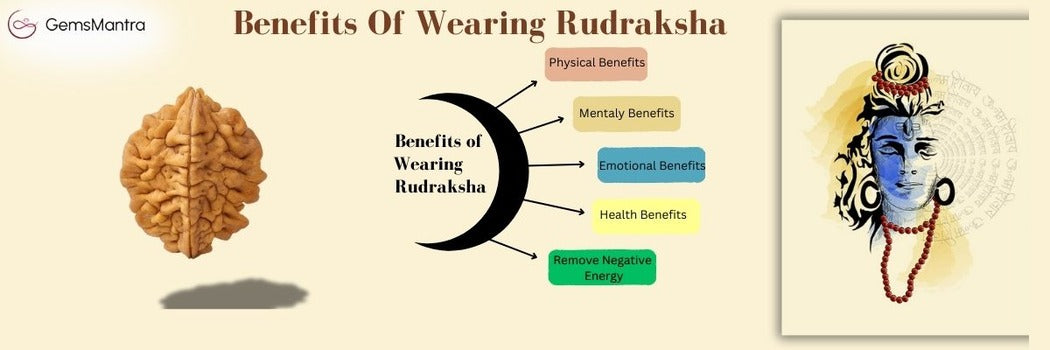
Benefits of Wearing Rudraksha Mala

Rudraksha Beads are described by their surface grooves, known as faces or mukhi. The following sections distinguish their traditional associations from claims about demonstrated effects.
A. Traditional Use and Personal Experience
Rudraksha is worn as part of devotional and meditation practices. The associations described here reflect traditional beliefs and personal experiences; they do not establish medical benefits.
B. Emotional Associations in Traditional Practice
- Calmness: In traditional practice, Rudraksha is associated with inner calm. This is a devotional association, not a guaranteed effect.
- Reflection and Attention: Some people include Rudraksha in practices centred on reflection and attention. Wearing a bead does not guarantee improved focus or decision-making.
- Emotional Reflection: Rudraksha may hold personal meaning as a reminder of spiritual values during difficult moments.
- Confidence and Positivity: Devotees may associate Rudraksha with optimism and personal resolve. Individual experiences vary.
C. Evidence and Limits

This article does not cite clinical studies establishing health effects from wearing Rudraksha. Its spiritual associations should not be presented as demonstrated effects on the body or used as medical guidance.
D. Astrological Associations of Rudraksha
- Planetary Associations: In some astrological traditions, different mukhi types are associated with particular planets. These associations are beliefs rather than guaranteed remedies.
- Zodiac Traditions: Practitioners may recommend Rudraksha according to a zodiac sign. Such guidance reflects the tradition being followed and does not guarantee particular life outcomes.
- Numerology Traditions: Some practitioners use numerology when recommending a bead. This is a traditional selection method, not evidence that a bead will change a person's circumstances.
E. Spiritual Associations of Rudraksha
- Spiritual Protection: In devotional traditions, Rudraksha is regarded as a symbol of spiritual protection. This is a religious belief, not a guarantee of safety.
- Spiritual Growth: Rudraksha, often called the “Tears of Shiva,” has devotional significance for people who include it in prayer and meditation. Its meaning depends on individual beliefs and practice.
- Positive Intentions: Some devotees wear Rudraksha as a reminder of positive intentions and spiritual values. Wearing it does not guarantee changes in a person's circumstances.
- Chakra Associations: Some spiritual traditions associate Rudraksha with chakras. These associations describe spiritual beliefs and should not be presented as demonstrated effects on the body or mind.
Conclusion
Rudraksha has traditional devotional significance. The associations described here reflect beliefs and personal experiences; outcomes are not guaranteed. Choose with clear product information and realistic expectations.
Related Blogs
Frequently Asked Questions
In traditional practice, Rudraksha is worn as a devotional symbol associated with protection and inner calm. These are beliefs and personal experiences, not guaranteed effects.
There are nearly 21 types of Rudraksha, with the most common ranging from 1 to .
Some people use Rudraksha during devotional or meditation practice. Experiences vary; improved focus or calm is not guaranteed.
Yes, Rudraksha can be worn with other jewelry, but choose combinations that resonate well together.
There is no guaranteed result or timeframe from wearing Rudraksha. Its significance here is traditional and devotional.
Rudraksha is the seed of the Rudraksha tree (Elaeocarpus ganitrus), found mainly in the Himalayan region and Indonesia.
There is no single bead that is best for everyone. Consider your devotional preferences, bead characteristics and available product information. A practitioner can explain traditional associations.
Written by Shruti Tiwari


