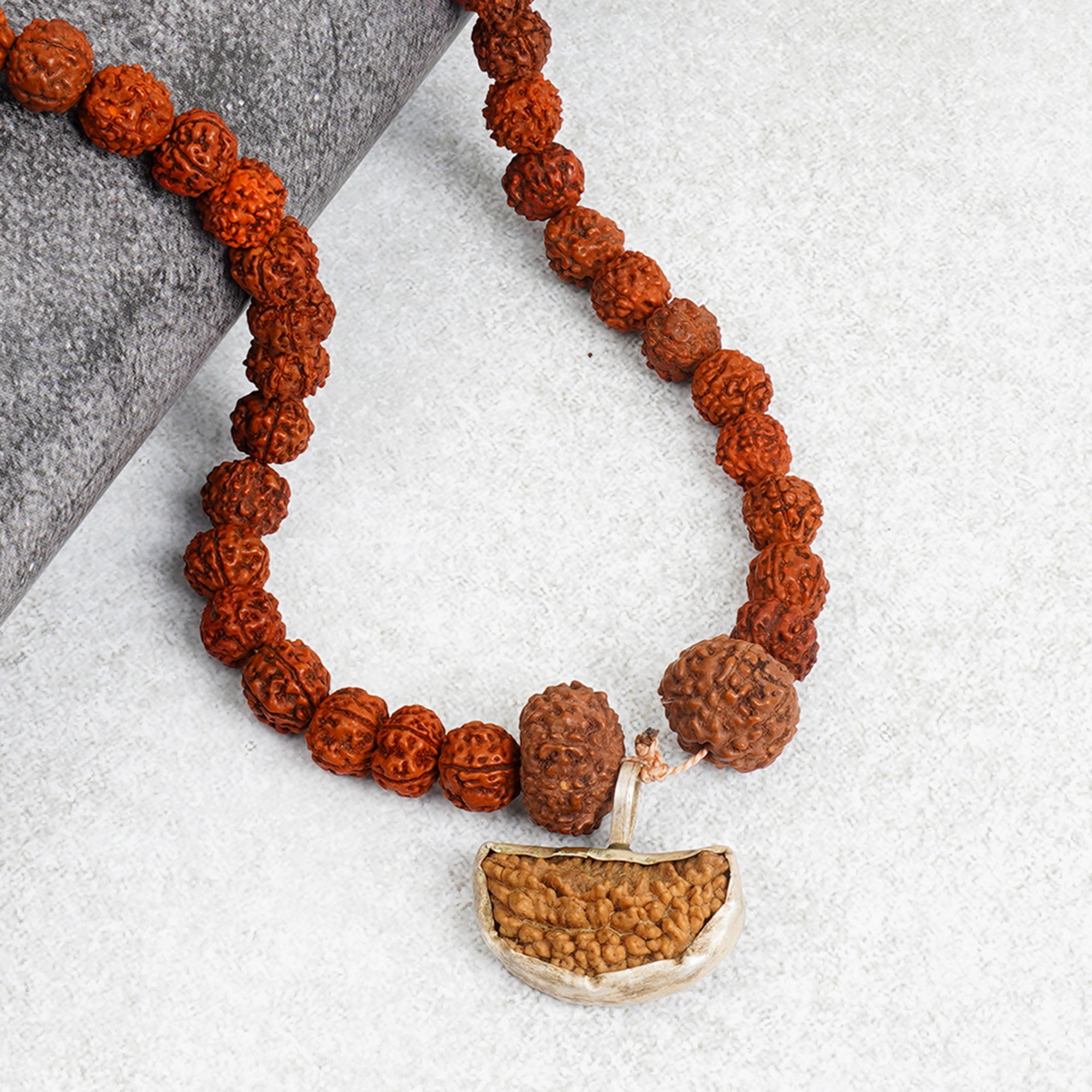
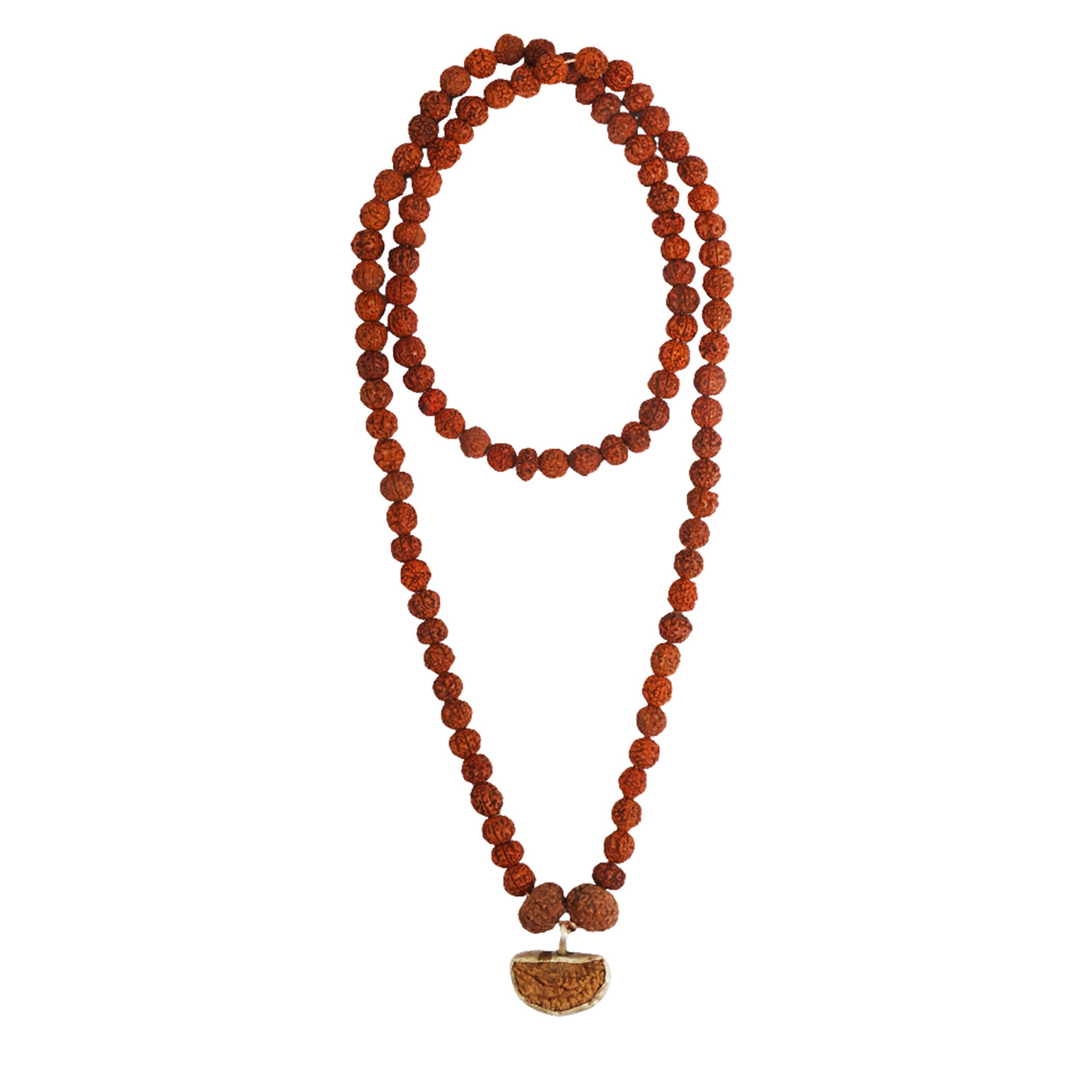
Tulsi Mala Benefits for Mind, Devotion & Growth
Quick answer: A tulsi mala is a string of beads carved from the wood of the sacred tulsi (holy basil) plant. In Vaishnava tradition it is worn around the neck as a kanthi or used as a 108+1 bead japa mala to chant the names of Lord Vishnu and Lord Krishna, and devotees associate it with concentration, devotion, emotional calm and purity. Women and men wear it in the same way. These are devotional and traditional beliefs: a tulsi mala is not a medicine, and no outcome is guaranteed.
With the daily chores, responsibilities, and constant thoughts, it is a boon to have something that provides a sense of calmness and concentration. The Tulsi mala, which consists of the sacred plant Tulsi, is mostly worn while praying, meditating, or chanting mantras. In Hinduism, Tulsi is a sacred herb with deep religious importance.
As its wood is formed into beads and threaded onto a mala, it is a means of sustaining calmness and dedication. It is worn around the wrist or neck by some, and held lightly during chanting mantras by others. Its natural texture and peaceful energy provide a constant pulse to the mind, one that keeps the individual centered in an area of peace.
The benefits of Tulsi mala are not limited to a religious ritual—it becomes an understated aspect of daily existence. Individuals use it to begin the day, to remain centered amidst pressure, or to close the day with prayer. The herb is also said to have purity and calming associated with it, and these are believed to be encased in the beads.
It is also closely related to Lord Vishnu and is frequently used in temples and houses as a devotional symbol. Daily usage of the Tulsi mala can provide one with a sense of emotional balance, inner realization, and spiritual awareness, rendering it an easy yet powerful routine in daily life.
Tulsi Mala Connection with Lord Vishnu
There is an ancient Hindu legend of Vrinda. She is a deeply devoted woman and the wife of Jalandhar, a powerful king. Her unshakeable faith saved her husband and made him stronger. To restore balance in the universe, Lord Vishnu disguised himself as Jalandhar to confront Vrinda and break the power of her spiritual dedication.
When Vrinda realized the truth, she was exceedingly hurt and cursed Vishnu to turn into a stone. This divine stone later became known as the Shaligram, which is worshipped in temples and even homes. Pleased by her devotion, Vishnu blessed her, promising that she would be reincarnated as the Tulsi plant and would always remain part of his offerings and worship.
Due to this divine relationship, the Tulsi plant is revered as a representation of religiosity and spiritual purity. The Tulsi is daily worshipped in most homes, and their leaves are offered to Lord Vishnu and Lord Krishna. Tulsi stem mala is used during mantra recitation, i.e., "Om Namo Bhagavate Vasudevaya" and the Hare Krishna Mahamantra, offering for concentration and memory.
The devotees make a Tulsi mala as a symbol of love and include it in their religious rituals. The rituals cannot be considered complete without Tulsi leaves at the temples, and in some traditions, a Tulsi leaf or a mala is kept beside an individual during their last rites. These traditions demonstrate the extreme reverence bestowed upon Tulsi as the bridge of the worshipper and the divine, shaping the soul in virtue and religiosity.
Types of Tulsi Mala
There are a number of different kinds of Tulsi malas, depending on how they are made, hand-made or machine-made, and for what purpose they are being used. Each shares the same divine energy of the plant but is better suited to different purposes and practices.
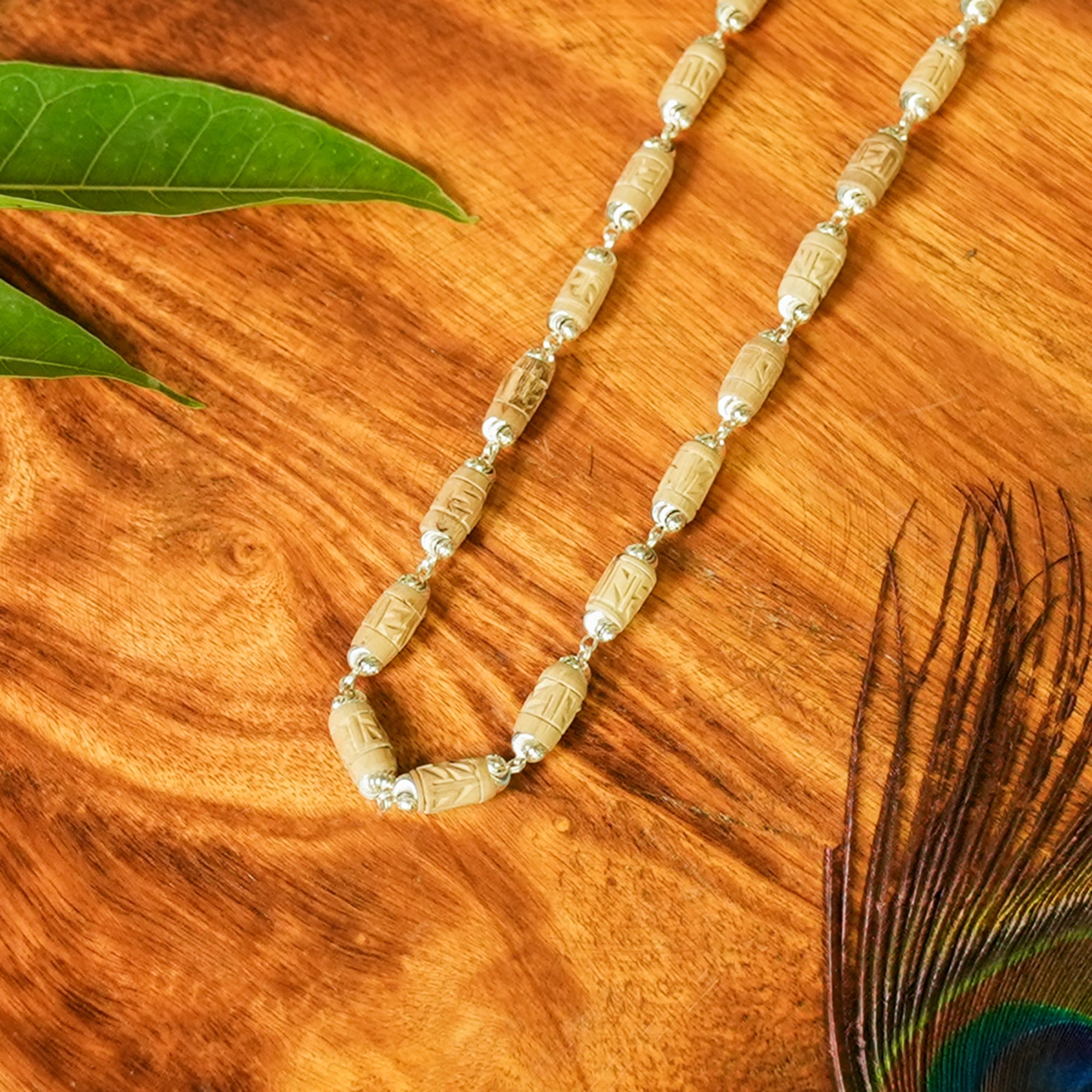
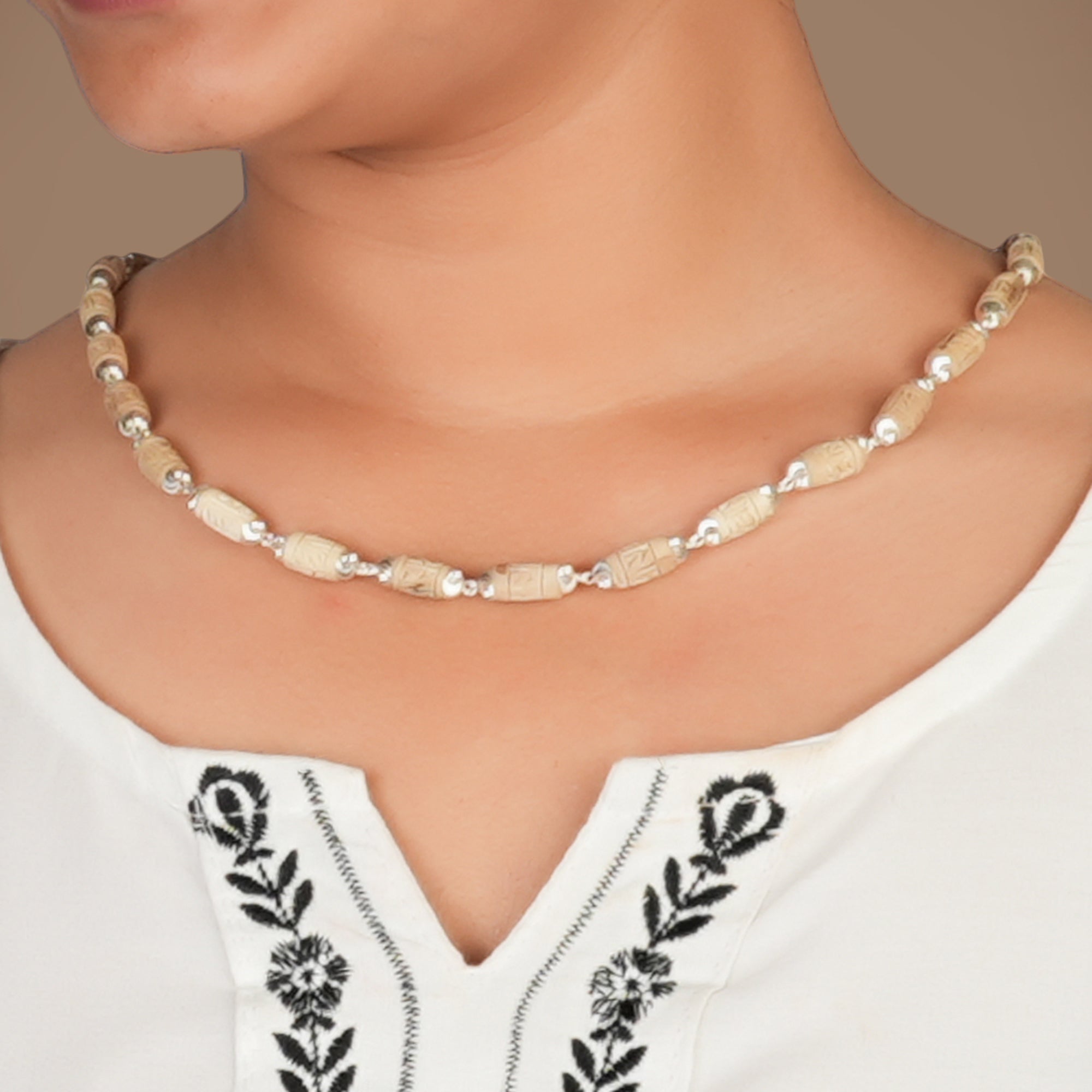
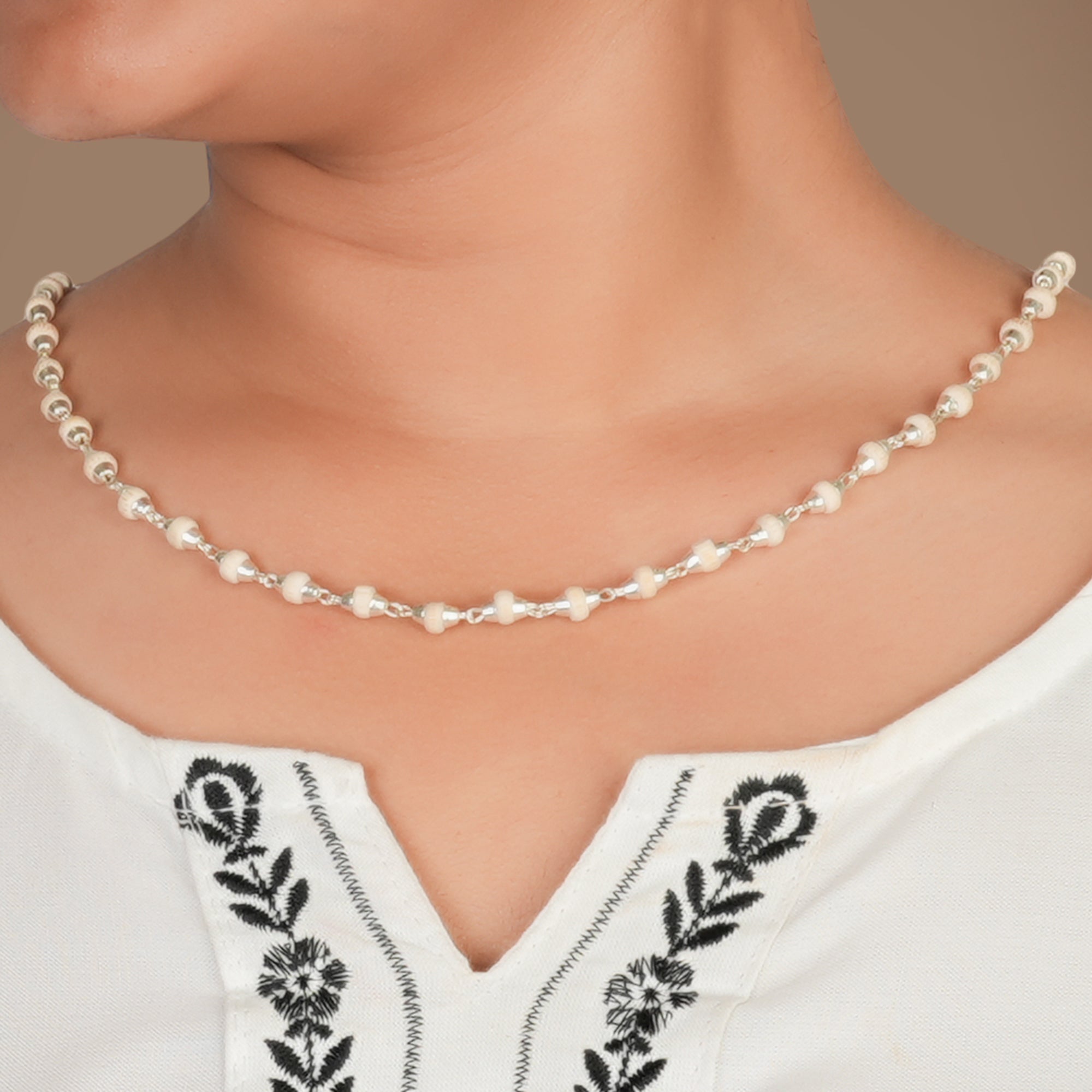
- Kanthi Mala (Neck Mala): This is a short two- or three-stranded Tulsi mala which is worn around the neck. It is highly sought after by devotees of Lord Krishna and Lord Vishnu and is traditionally offered in initiation or as a commitment to a spiritual way of life. It is worn as an emblem of faith, surrender, and innocence. The mala is not something to be worn on the outside only—it reminds the wearer constantly to lead a life with ethics and discipline.
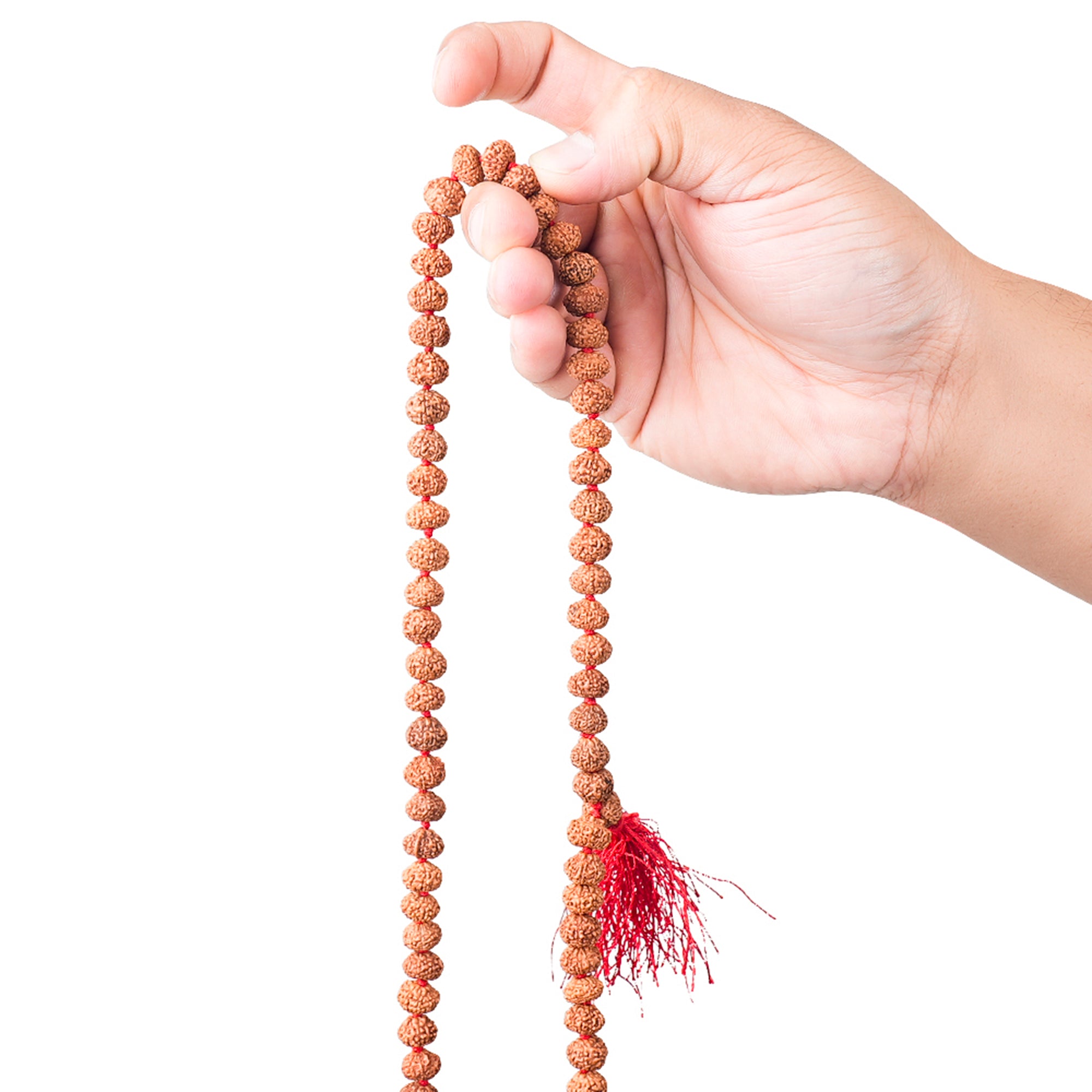
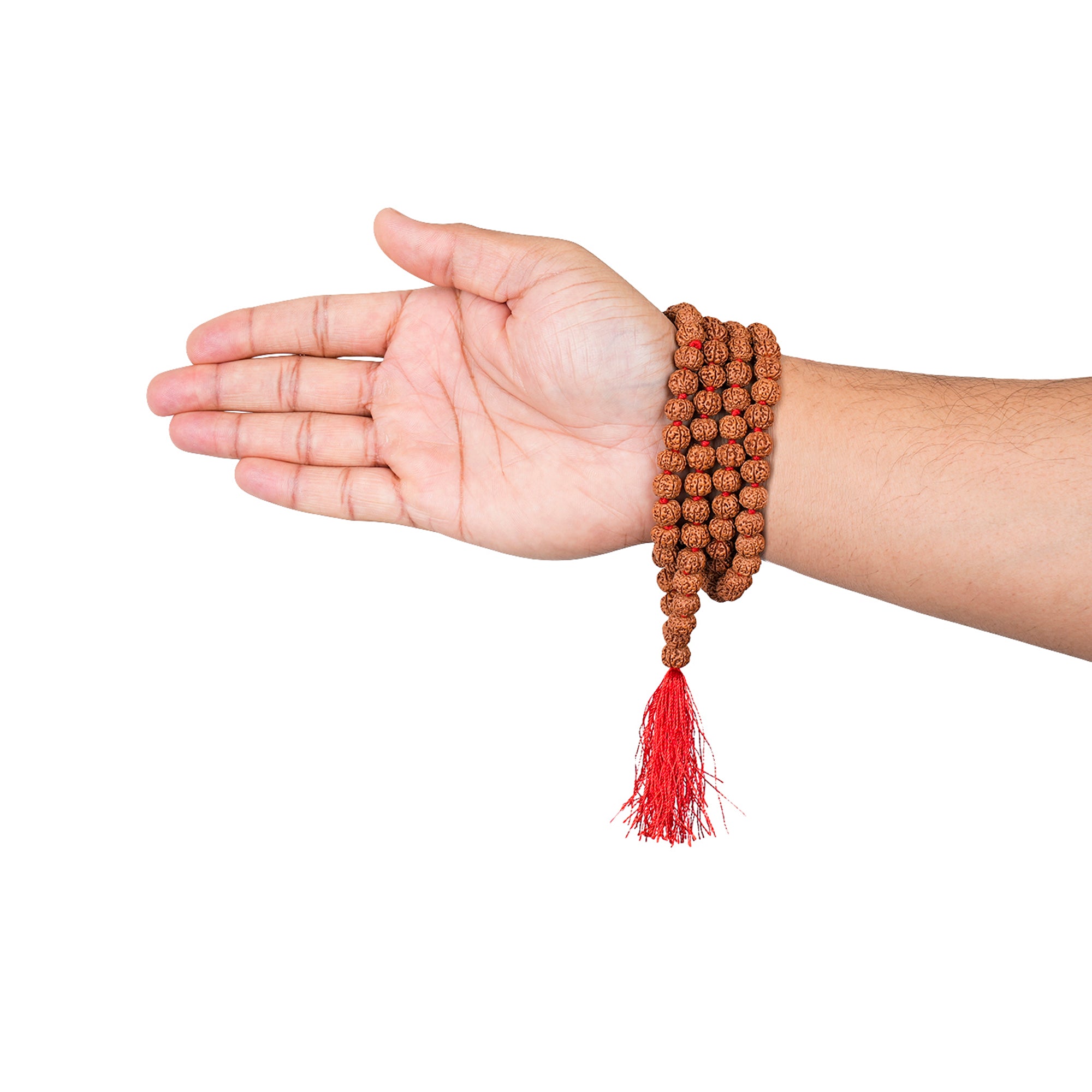
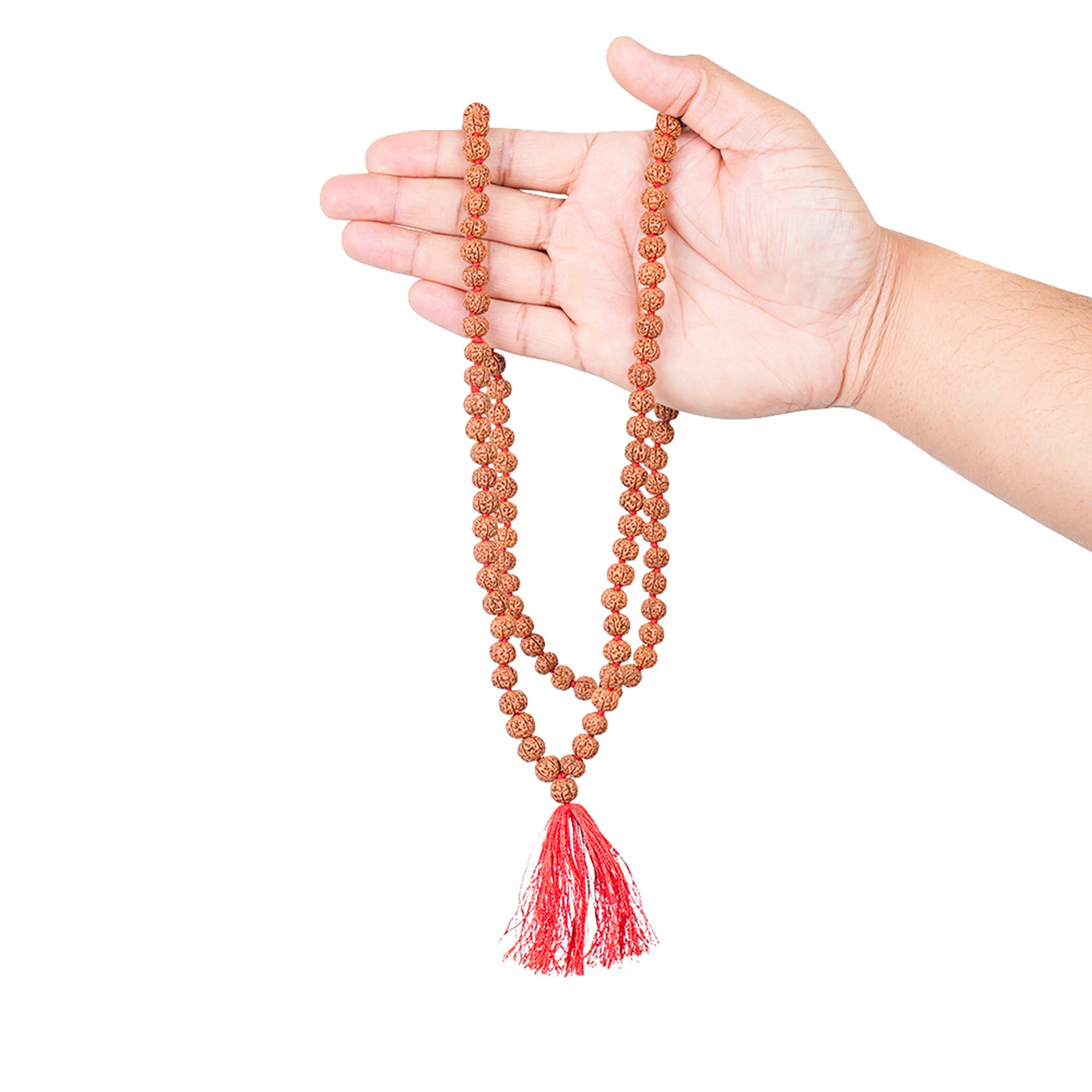
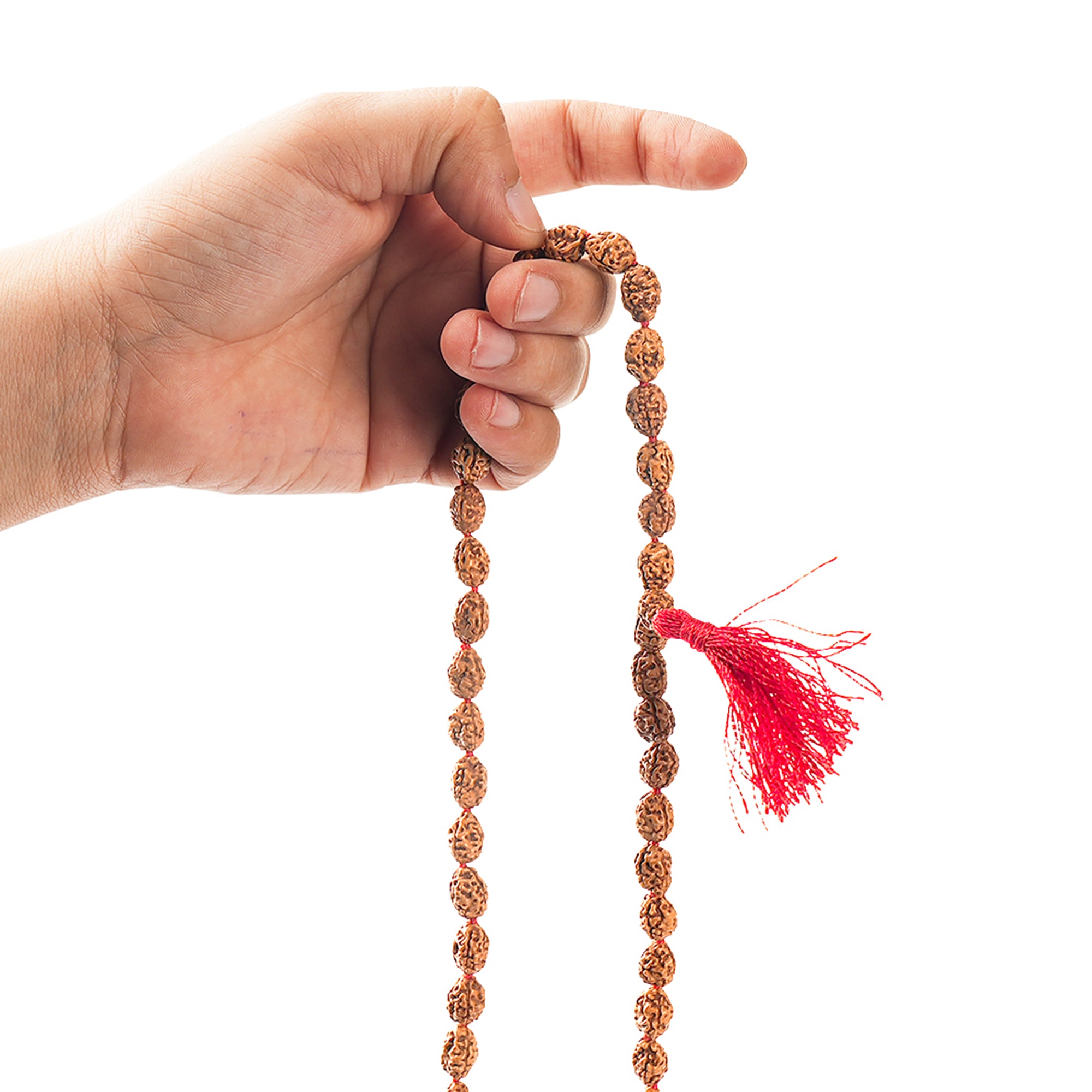
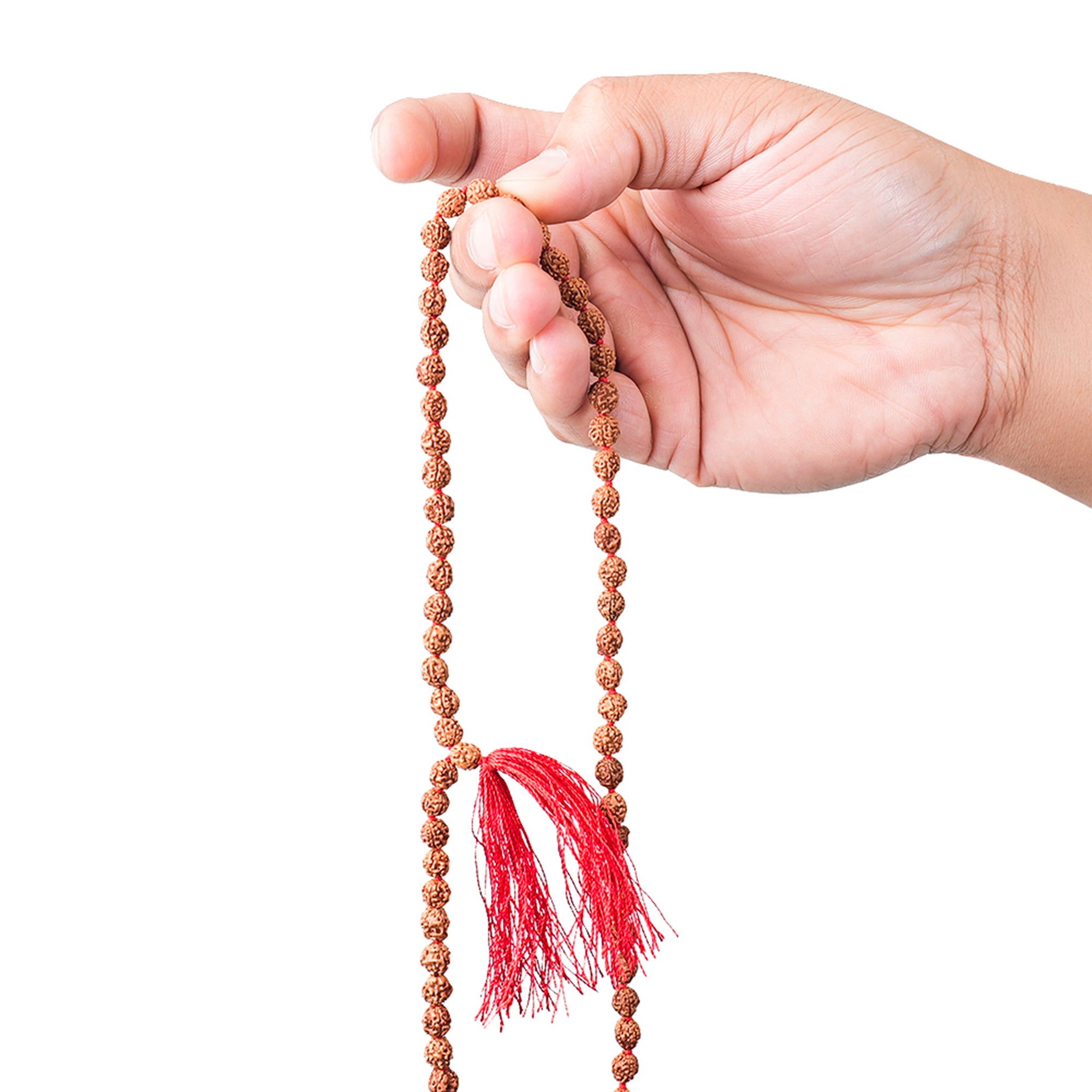
- Japa Mala (108 Beads for Chanting): It is a longer Tulsi mala, typically with 108 beads and a meru bead, which is specially reserved for japa or recitation of mantras. It is held in the right hand while reciting the name of God. The mala assists in keeping rhythm, focus, and count while reciting spiritually. It is worn on a daily basis for prayer, meditation, or when performing temple rituals.
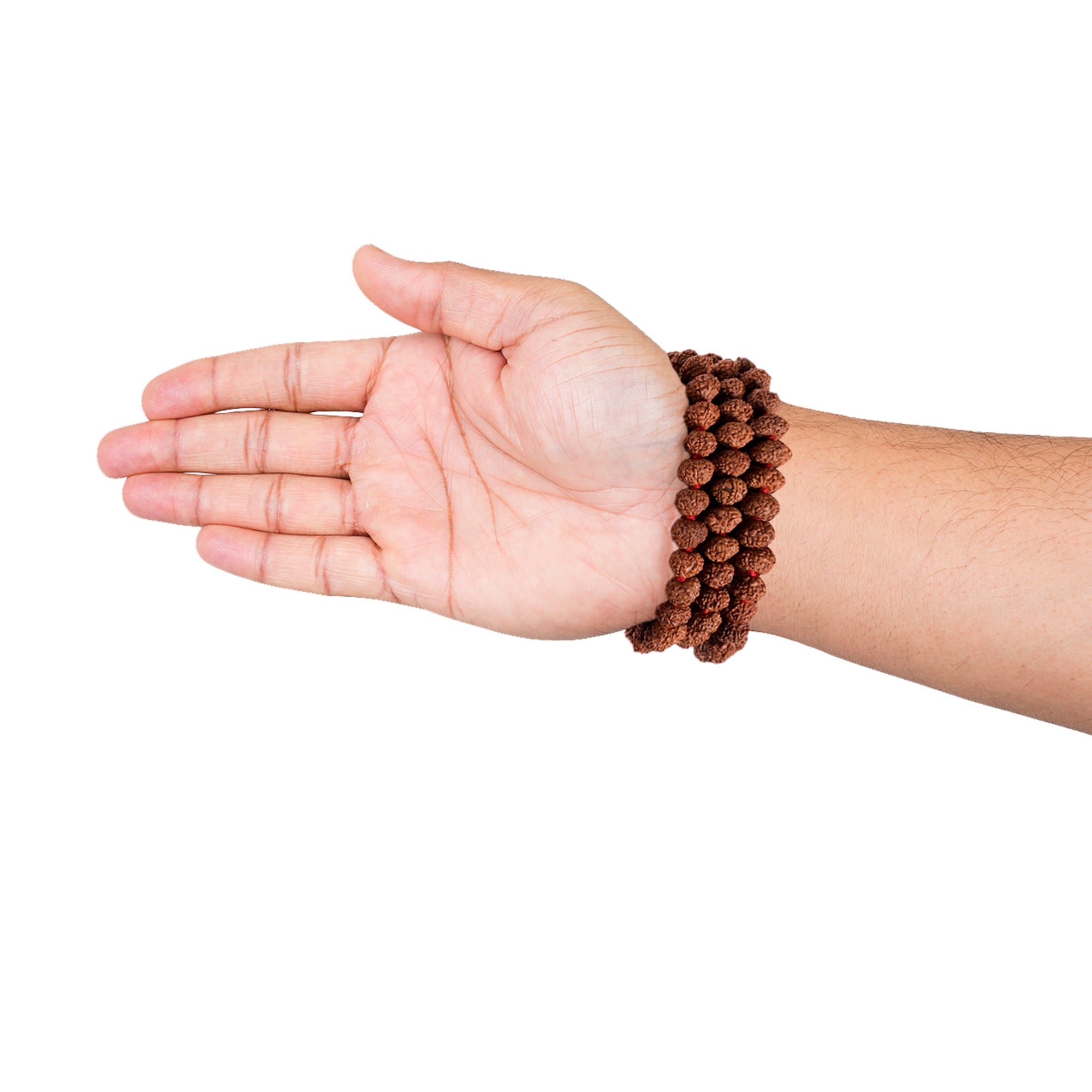
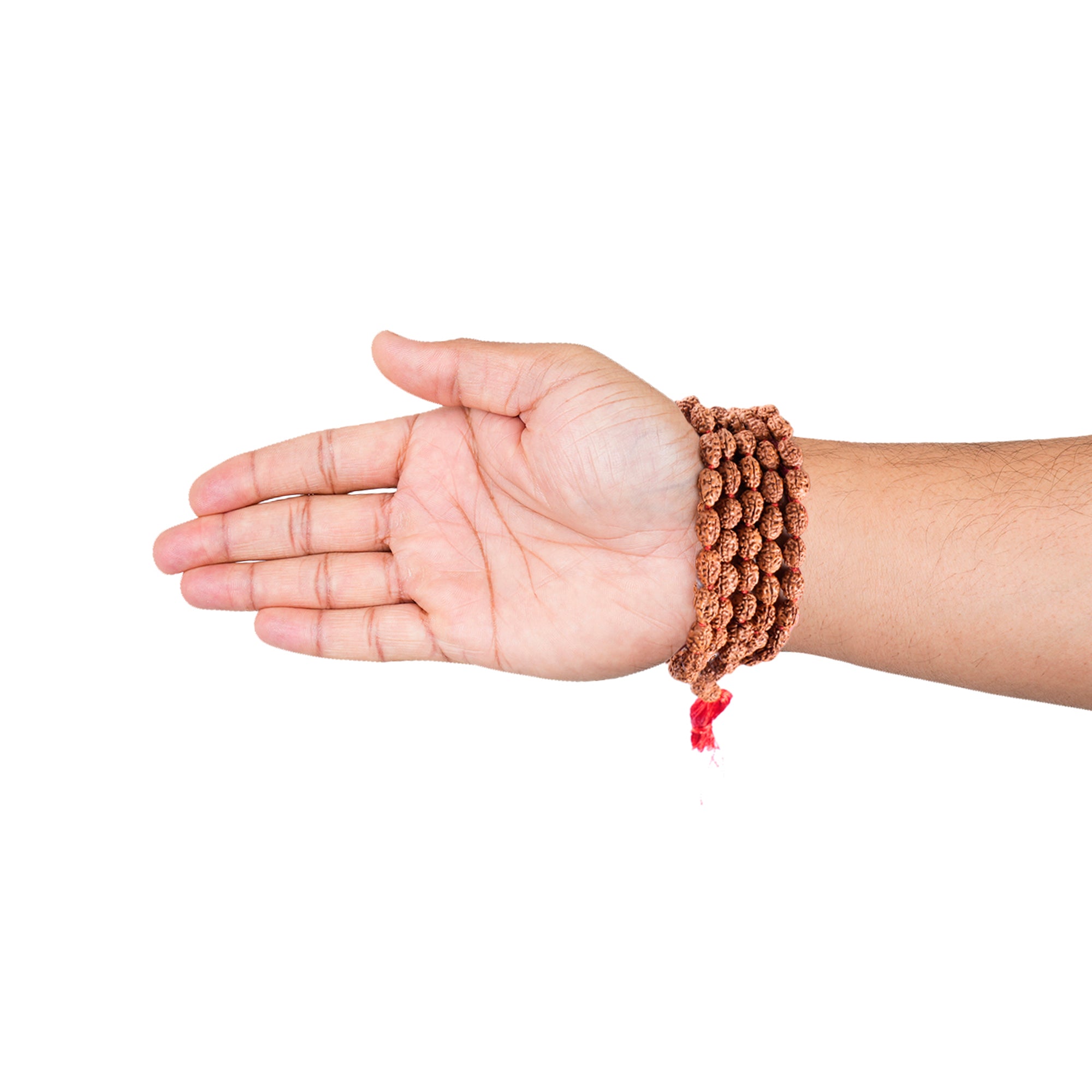
- Wrist Mala (Tulsi Bracelet): This compact version of the mala is wrapped around the wrist. It contains 27 or 54 beads and is used for sessions of shorter chanting or by those who wish to keep the mala in a small size. It acts as a reminder of one's religious values throughout the day, too.
- Tulsi Bead Rings or Single Beads: Many others wear one Tulsi bead as a ring or pendant, particularly when they cannot keep the full mala on for work or other limitations in life. Even that single bead is believed to absorb the divine energy of the plant.
Kanthi, black tulsi and silver tulsi malas
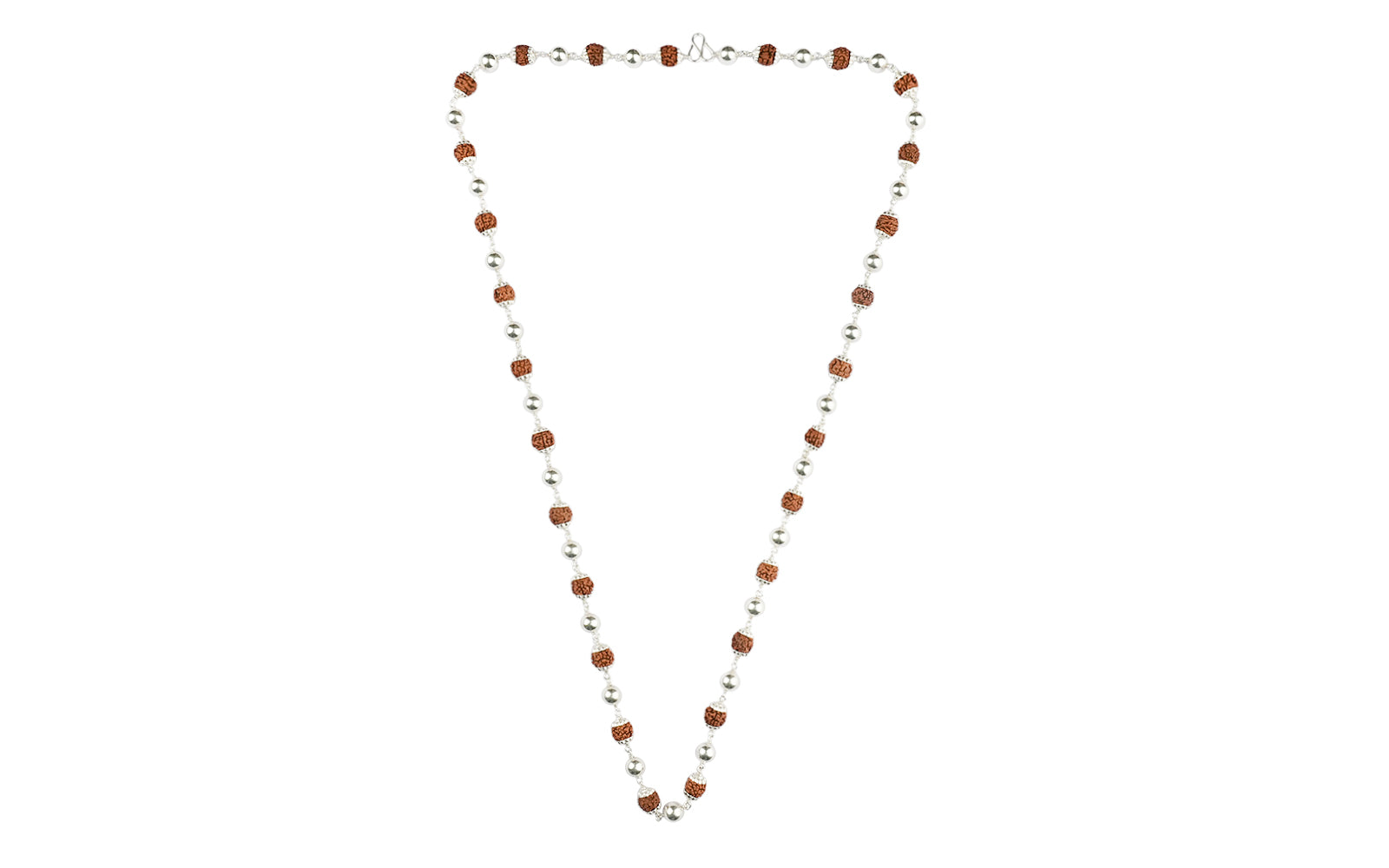
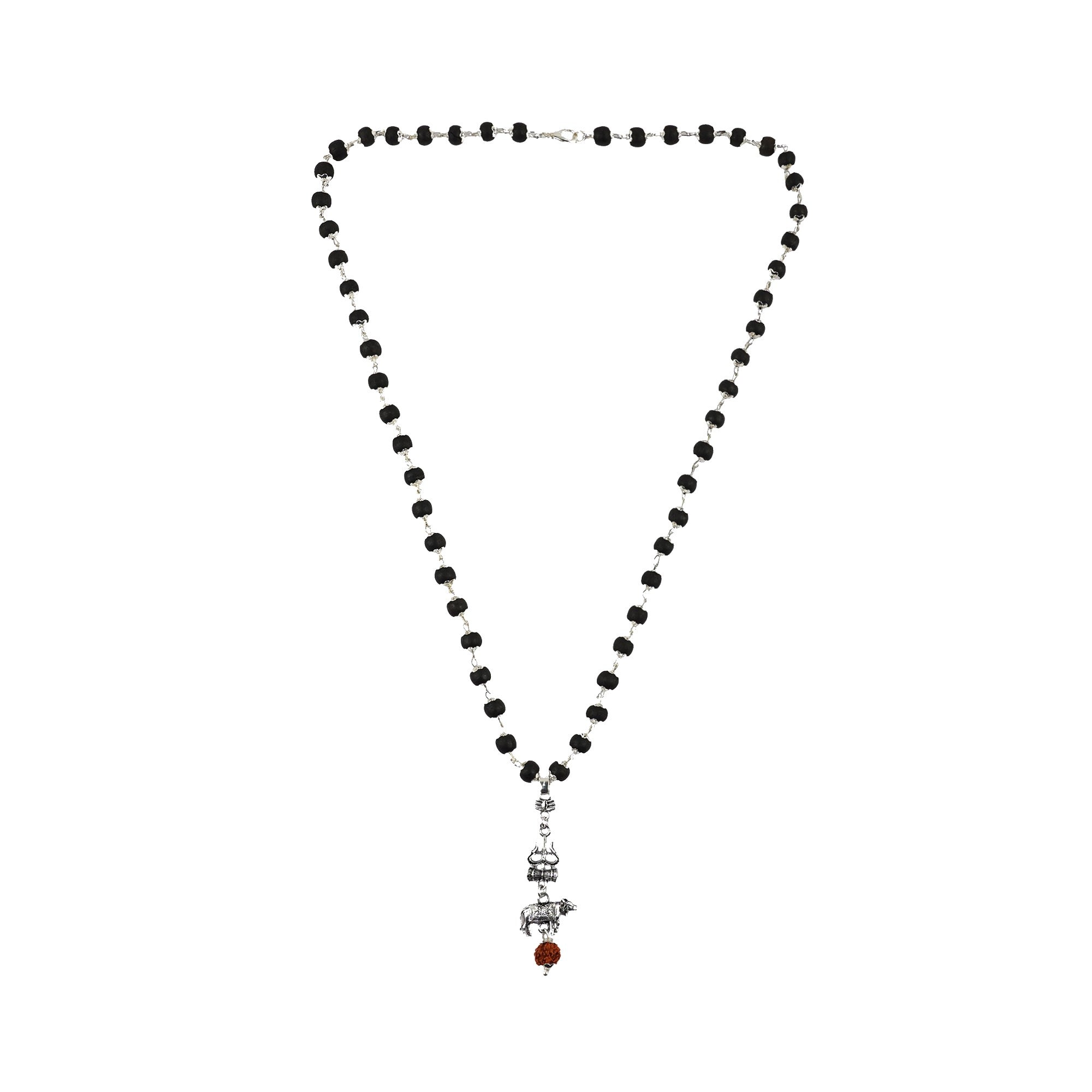
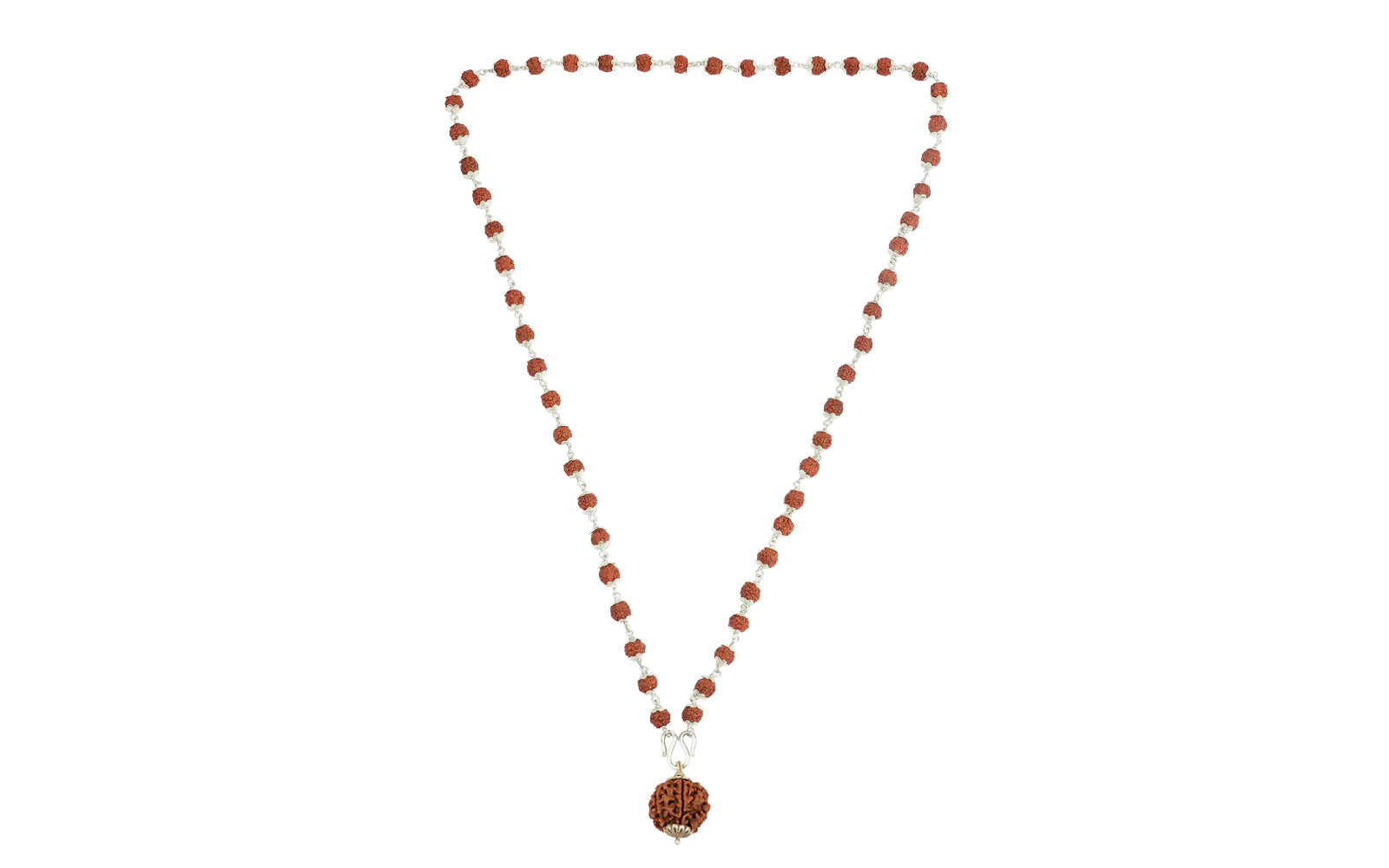
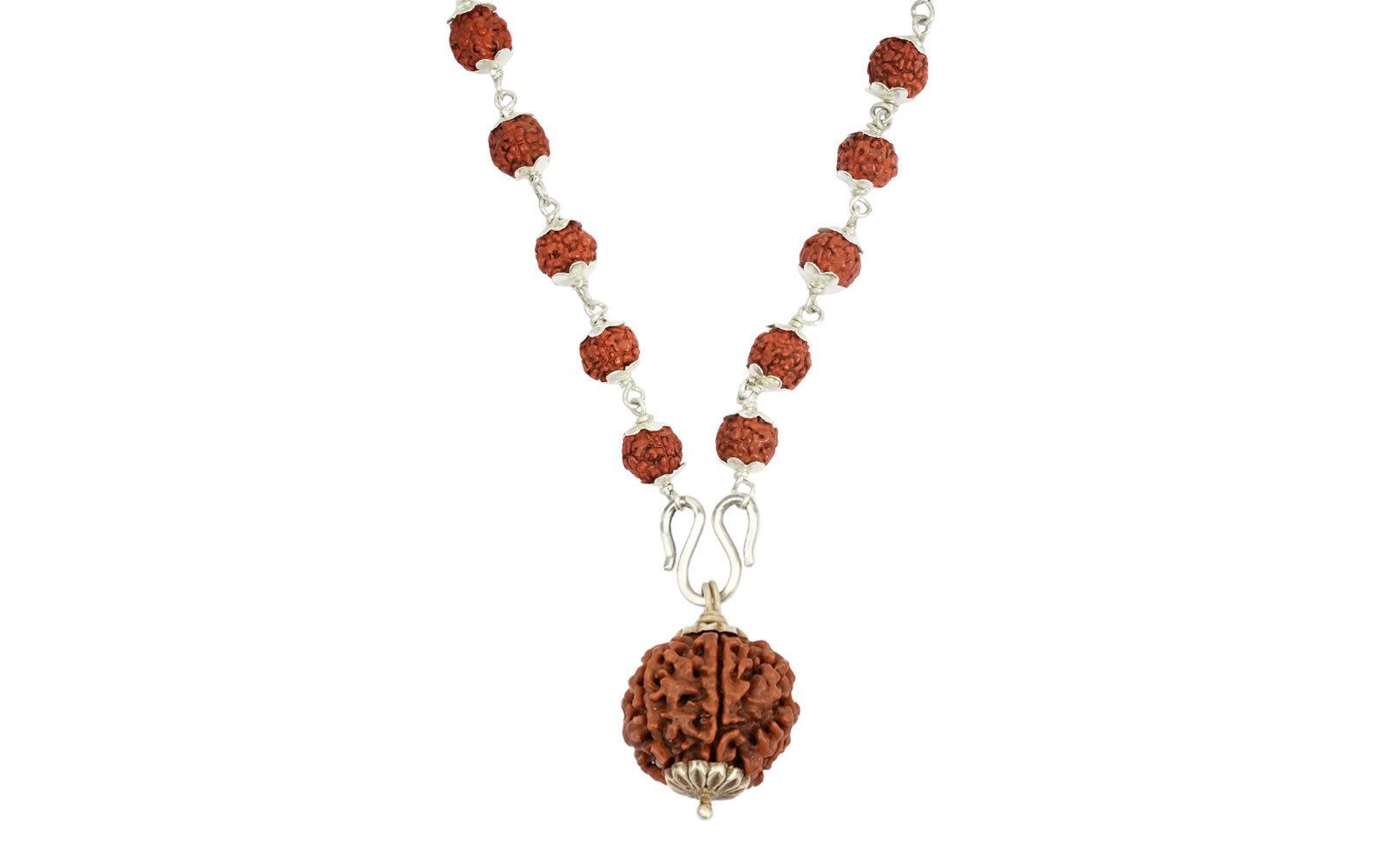
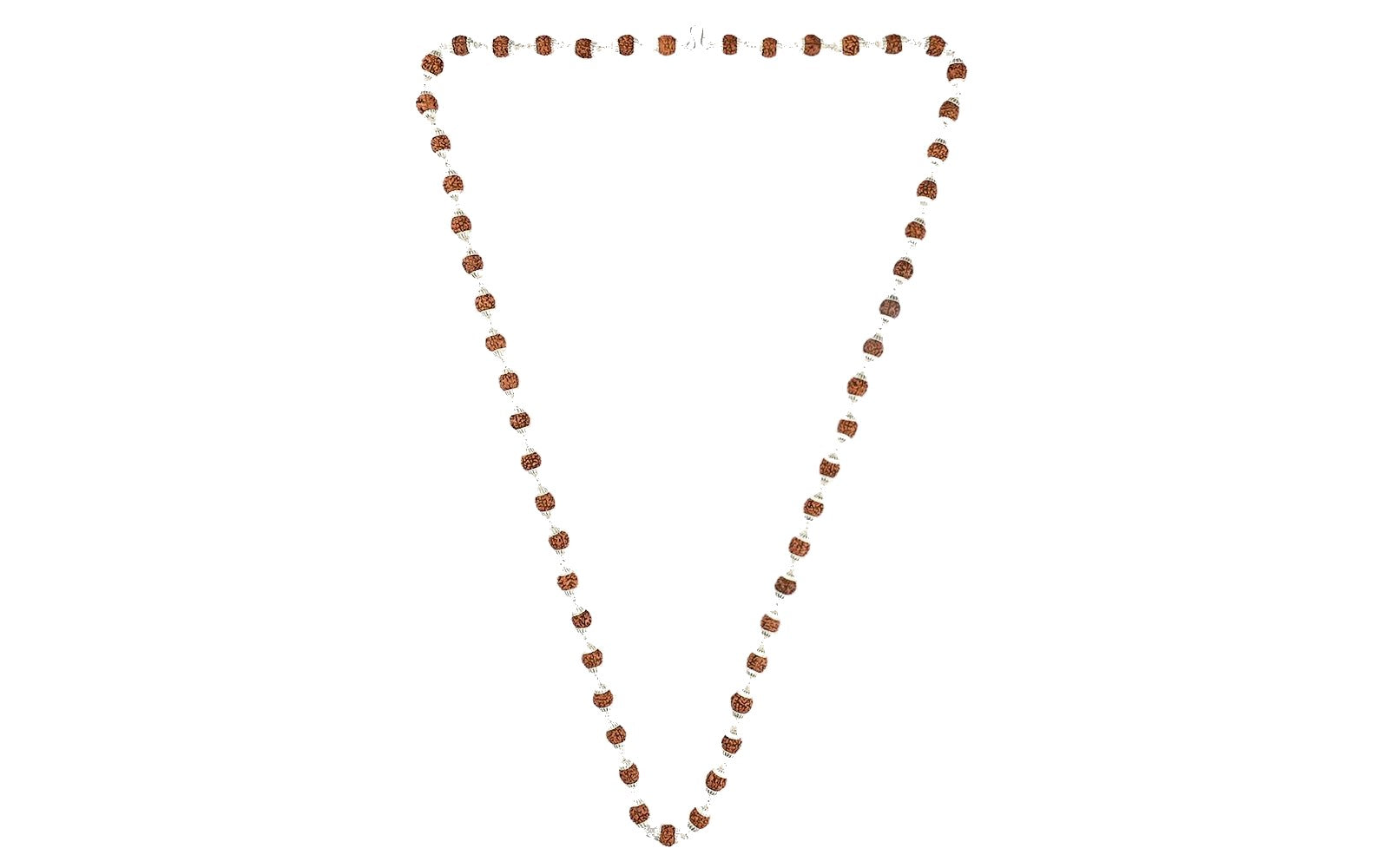
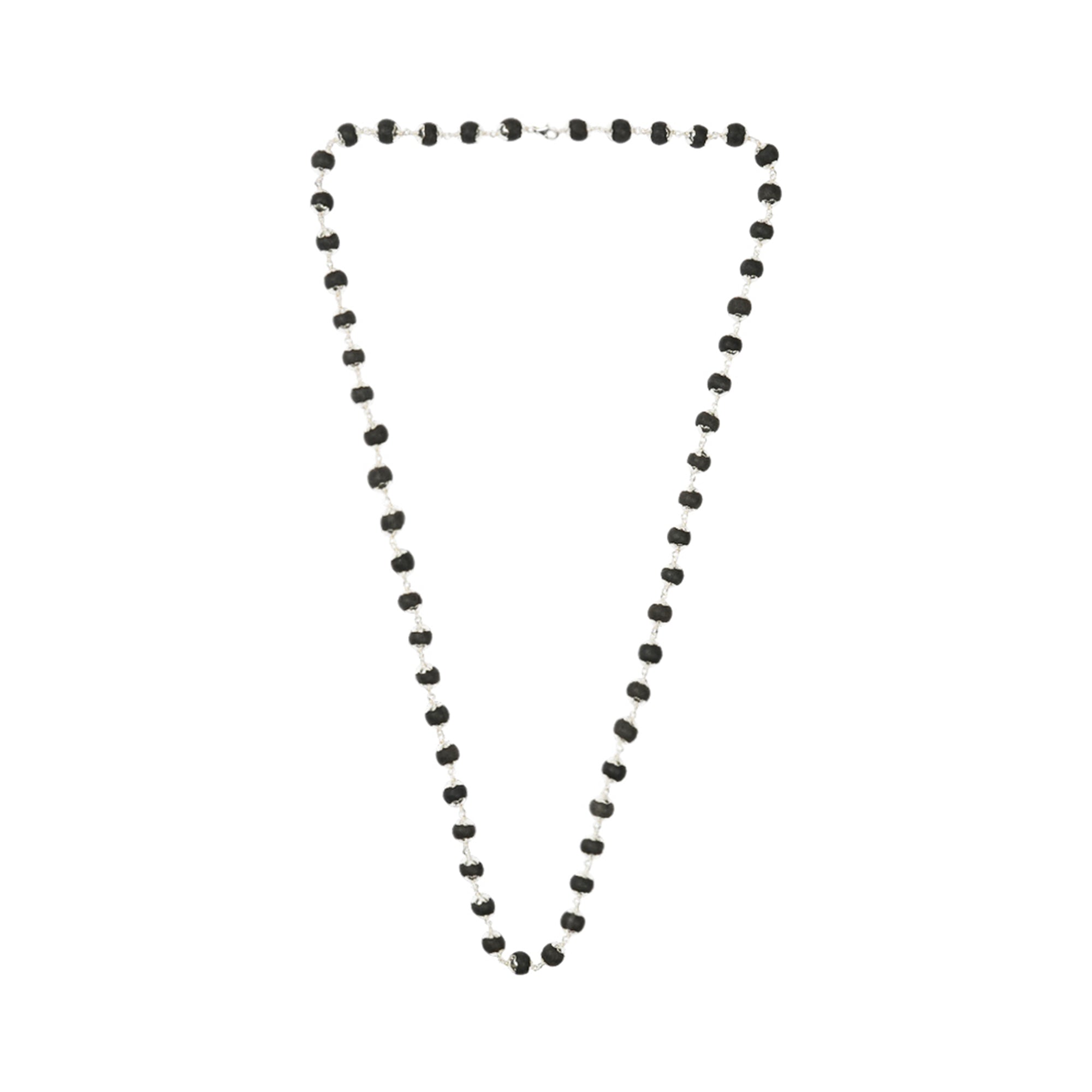
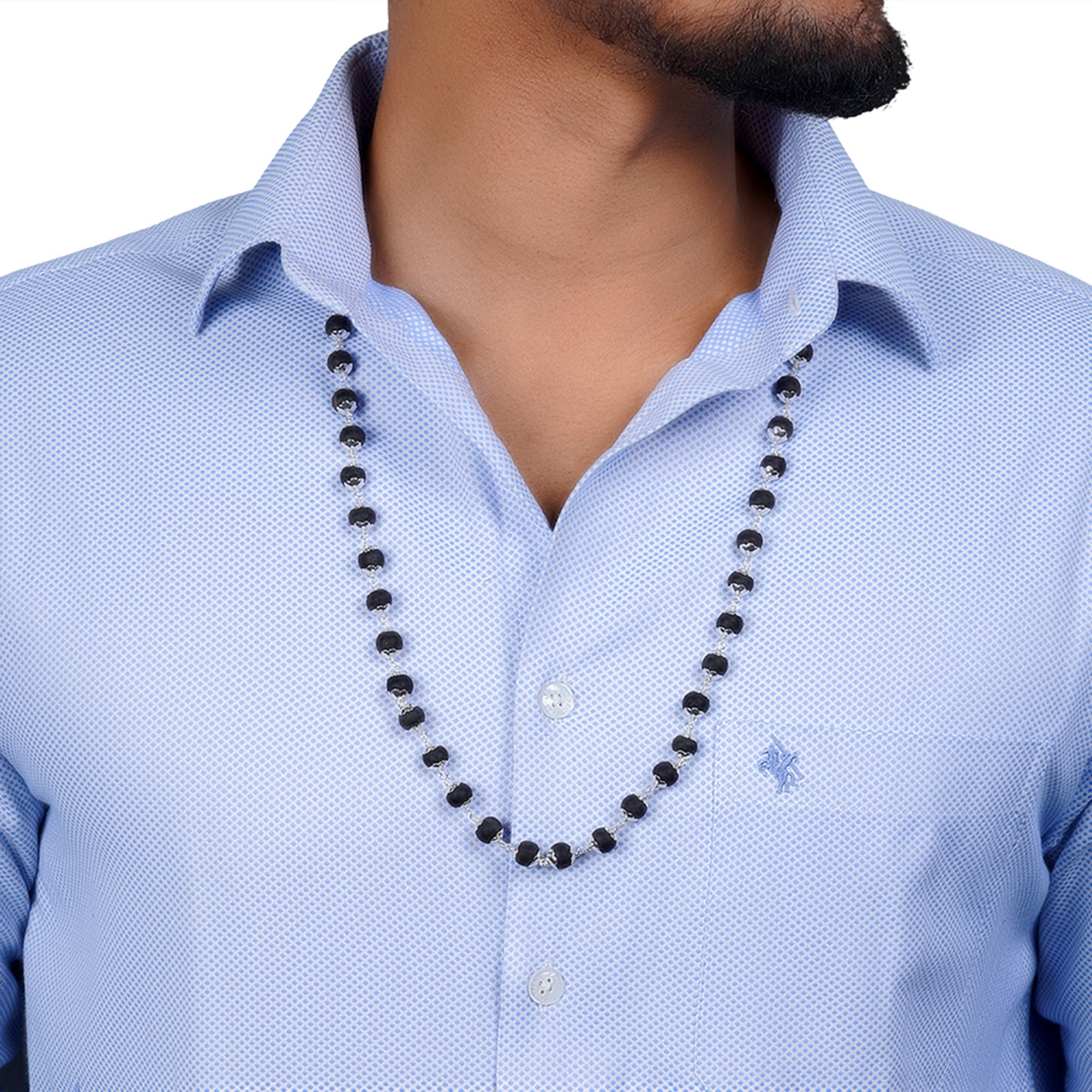
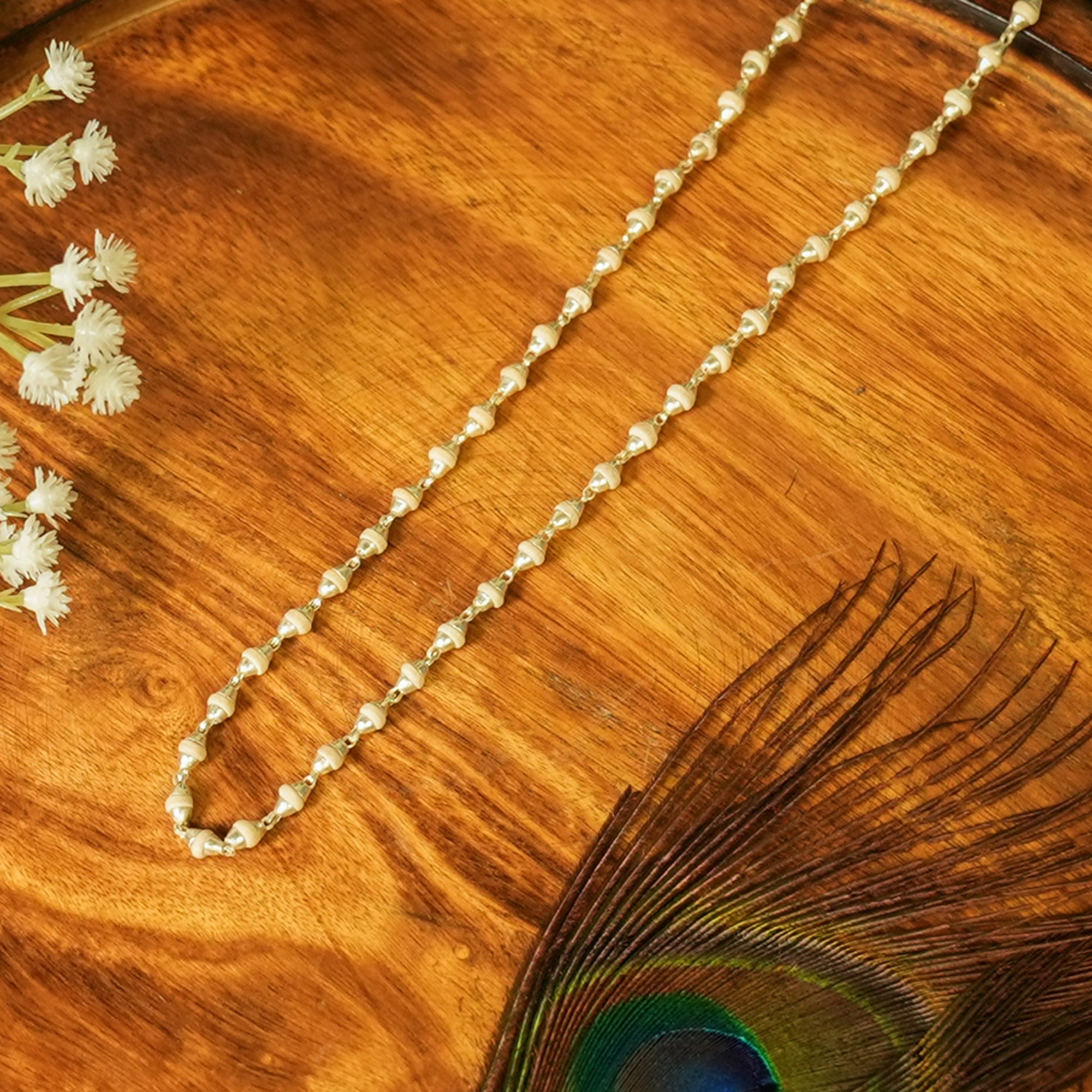
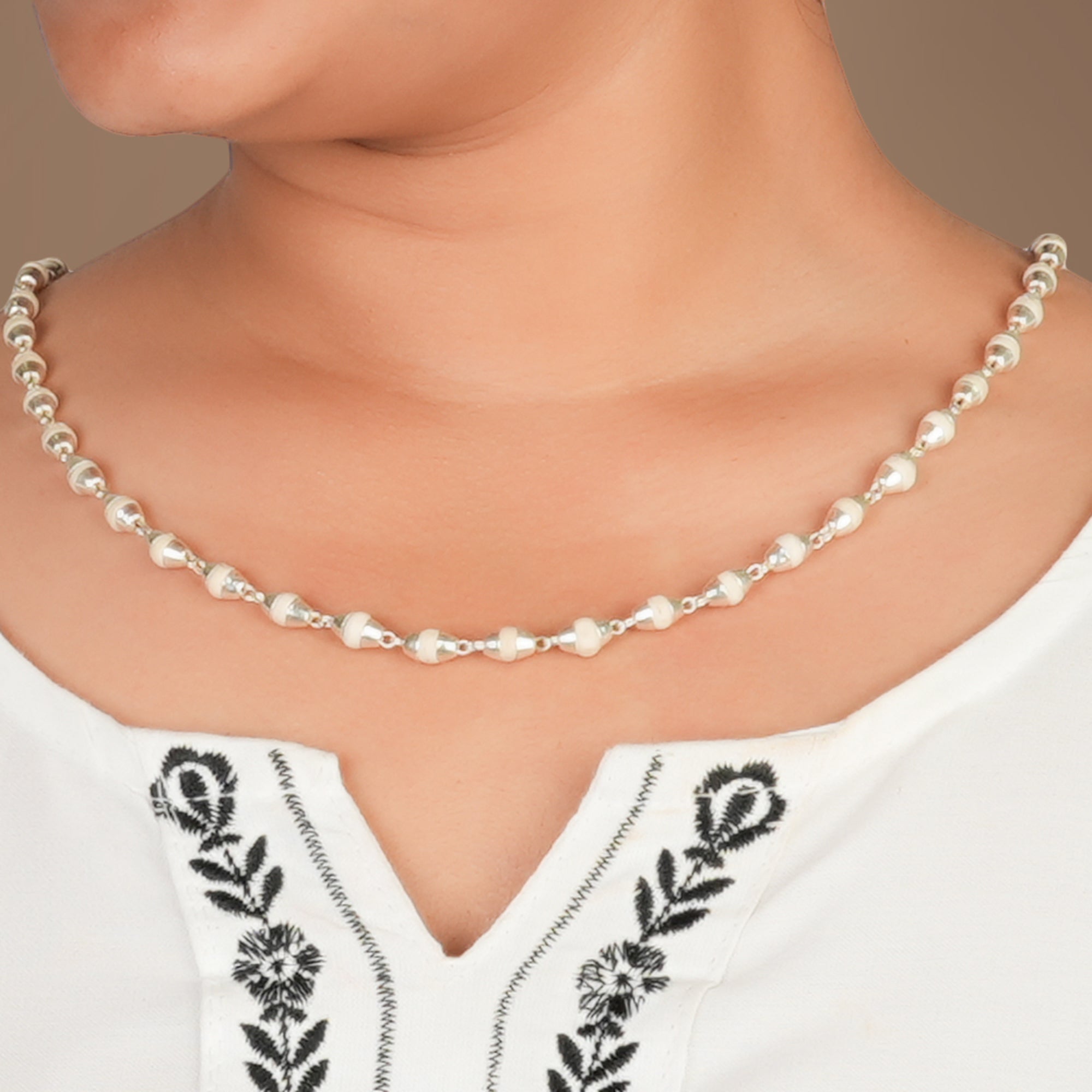
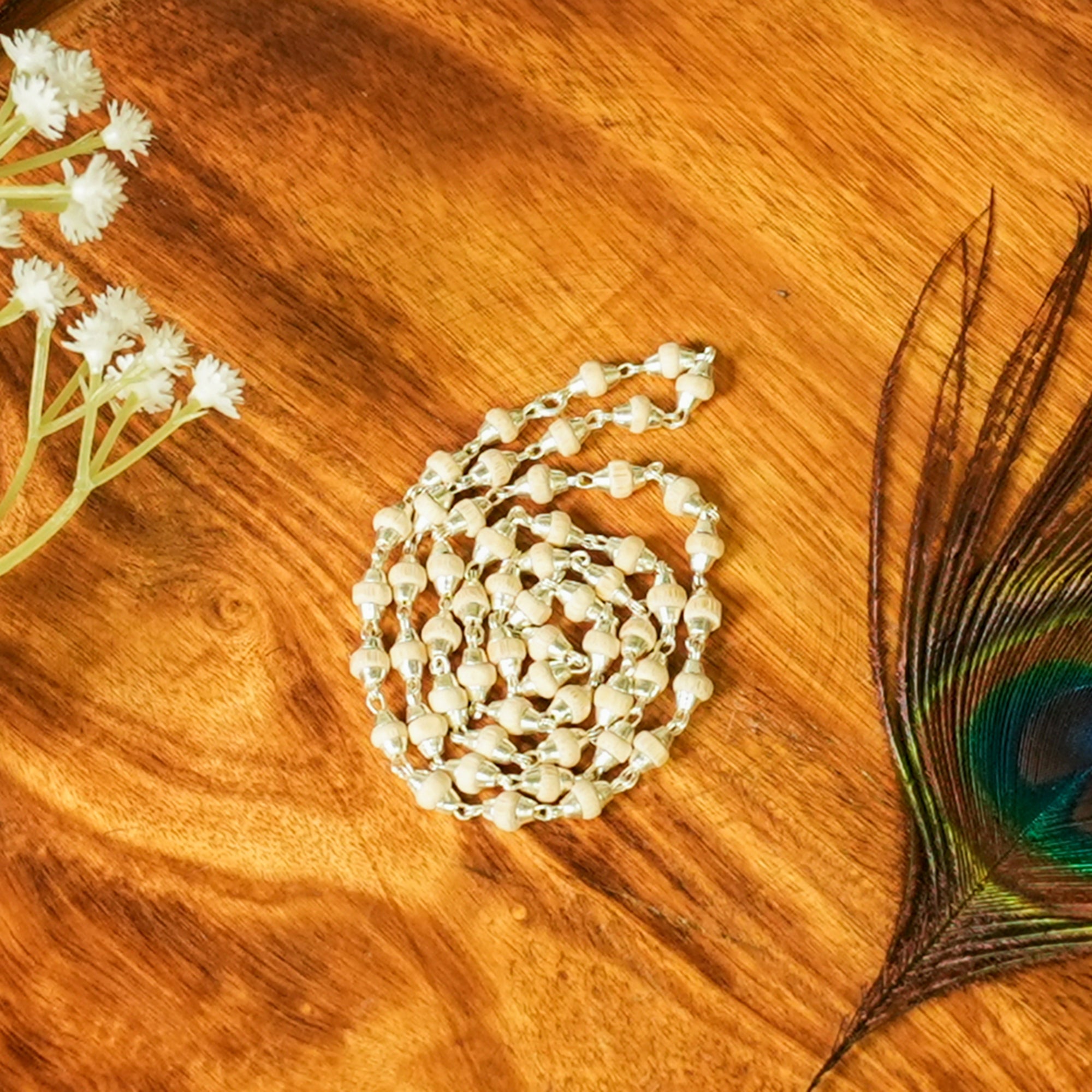
A kanthi mala is worn close around the neck, often in two or three rounds (strands); the number of rounds is a matter of devotional custom rather than a rule, and each is worn for the same reasons. A black tulsi mala is associated in tradition with the darker Krishna (Shyama) tulsi, and a silver tulsi mala simply adds silver caps or spacers for durability and finish. On 24 September 2026 our catalogue listed, for example:
| Mala | Listed price (24 Sep 2026) |
|---|---|
| Tulsi Kanthi Mala | ₹999 |
| Tulsi Mala, 108 beads, for japa | ₹999 |
| Round Bead Tulsi Kanthi Mala | ₹1,399 |
| Super Tulsi Mala | ₹2,149 |
| Silver Tulsi Mala | ₹5,549 |
| Black Tulsi Mala Silver | ₹7,999 |
Prices change with stock; see the Tulsi Mala collection for today's designs. Malas cannot be returned for a change of mind (only if damaged, defective or incorrect); see our Refund Policy.
 Sample image
Tulsi mala benefits for women and men
Tradition does not give the tulsi mala different benefits for women and men. Both wear it for devotion, concentration in japa and a calm, disciplined routine, and the same rules apply to both. Many women wear a kanthi mala every day; others keep a 108-bead japa mala for prayer and wear a tulsi bracelet during the day.
Benefits of Wearing a Tulsi Mala
The usage of Tulsi mala brings Tulsi mala benefits, and regular usage in daily devotional life is a sacred ritual in the Hindu heritage. Made from the sacred Tulsi plant, each bead possesses an unspoken presence that fosters devotion, inner willpower, and a memory of the divine.
The mala becomes a companion that seeks silence for the mind, consolation for the heart, and significance in everyday moments for most devotees. Some of the inner accomplishments that come with the Tulsi mala are as follows, as reported by those who have walked the religious path with an untainted heart.
- Enhances Concentration and Mental Discipline.
- Strengthening Devotion to Lord Vishnu.
- Maintains Planetary Energies in Astrology.
- Carries Purifying Energies.
- Encourages Healthy Relationships.
- Symbol of Spiritual Identity and Simplicity.
- Balances Emotions and Soothes the Heart.
- Linked with Subtle Well-being (Ayurvedic Belief).
- Used for Emotional Strength in Challenging Times.
- Attracts Financial Positivity through Energetic Cleanliness.
- Supports the Soul’s Journey After Death.
1. Enhances Concentration and Mental Discipline
One of the most useful yet spiritually valuable benefits of Tulsi mala is that it can be used to improve concentration and mental discipline. If used for meditation or japa (recitation), the circular motion of rotating each bead between the fingers calms the mind and keeps one's attention focused on a mantra or idea.
This is said to promote regularity, support memory and quieten the mental chatter that so easily distracts us. Over time, it fosters inner peace and awareness—attributes vital to both spiritual development and everyday existence. For nervous, overthinking, or undirected persons, Tulsi mala is a simple yet powerful tool to condition the mind towards serenity and direction.
2. Strengthening Devotion to Lord Vishnu
Wearing or chanting a Tulsi mala is considered an act of worship towards Lord Vishnu and his avatars, particularly Lord Krishna. According to ancient scriptures, Tulsi is a herb described as the earthly form of Vrinda Devi, a pure devotee and celestial consort of Vishnu.
This makes the mala not only a sacred jewelry but also one that symbolizes complete surrender and endless union with God. Believers feel that putting on a Tulsi mala while chanting brings them closer to God, cleanses the mind, and grants divine grace into one's life. It is a constant reminder of one's bhakti (devotion) journey at all times, which means every bead is one step towards spiritual alignment.
3. Maintains Planetary Energies in Astrology
It is believed in Vedic astrology that Tulsi mala benefits also include the ability to mitigate the negative effects of certain planetary influences, specifically those associated with Rahu, Ketu, and Saturn (Shani). These are usually related to muddle, delays, or mental disturbances in one's life.
Wearing a Tulsi mala would introduce a small balance at such times, particularly during difficult periods like Sade Sati or Rahu Mahadasha. It is claimed to be a protector of negative energies and karmic blocks and enable the wearer to walk their astrological path with a clearer mind and fewer obstructions. Tulsi mala is often advised by spiritual guides and astrologers for those seeking emotional balance during difficult planetary periods.
4. Carries Purifying Energies
Tulsi is also said to be a divine plant that emits sattvic (pure, balanced) energies. Worn as a mala, it is said to purify the aura of the wearer by wiping away tiny negativities from the mind and body. This purifying function not only affects the individual but also the environment, making it an even more prayerful, meditative, or serene living space.
It forms an intangible spiritual barrier that wards off distraction, negative energies, and mental confusion. The Tulsi mala is also placed within easy reach of most practitioners near holy spaces or altars to maintain a spiritual ambiance.
5. Encourages Healthy Relationships
The practice of wearing a tulsi mala is also known to extend to interpersonal relationships. Daily spiritual practice with the mala helps in maintaining emotional equilibrium so that it becomes simpler to deal with loved ones with compassion and forbearance.
It gives rise to humility, forgiveness, and understanding—those which are necessary for a true relationship, particularly family life. Worn while chanting mantras or practicing mindfulness, the mala subtly develops emotional maturity, reduces ego responses, and fosters a sense of devotion in all dull situations, leading to closer and more harmonious relationships.
6. Symbol of Spiritual Identity and Simplicity
In addition to its vibrant colorfulness, the Tulsi mala also holds profound symbolic significance. It signifies one's dedication to a simple, conscious, and religious existence. It is not exhibitionism, but rather an affirmation of one's inner alignment with higher principles and respect for divine truth.
To people, the Tulsi mala is a faithful companion—a reminder to live consciously, humbly, and in faith. It identifies the wearer as being in the way of dharma, opting for reflection and self-control rather than indulgence and diversion.
7. Balances Emotions and Soothes the Heart
Another benefit of the Tulsi mala is that the Tulsi energy is said to soothe the emotional body. For those going through loss, heartbreak, or grief, the use of a Tulsi mala is a gentle reminder of inner resilience and divine guidance.
It soothes internal restlessness and encourages calming on the emotional level by asking the heart to remain soft and strong. This mala can be chanted and become a comforting ritual—a way of moving through suffering with spiritual support and emerging stronger in one's faith.
8. Linked with Subtle Well-being (Ayurvedic Belief)
Though Tulsi beads are not consumed like the leaves, they are a part of Ayurvedic knowledge of Tulsi as a life force and a pure plant. Wearing a Tulsi mala is thought to soothingly neutralize the body's energy systems, maximizing vitality and balance overall.
It is more of a spiritual pick-me-up than a medical remedy, but it is said to bestow a robust prana (life energy) upon the wearer that makes him or her feel good and strong on the inside.
9. Used for Emotional Strength in Challenging Times
Tulsi mala is an internal emotional strength, particularly in times of loss, confusion, heartbreak, or life transition. The herbal beads are said to carry subtle vibrations that encourage inner peace.
Most of the devotees find that just holding the mala quietly or in prayer provides deep emotional grounding. It reminds one of God's wisdom and prompts courage without weighing the mind with complexity. Therefore, Tulsi mala is a very reassuring spiritual guide in storms of emotion.
10. Attracts Financial Positivity through Energetic Cleanliness
In Vastu and spirituality, Tulsi is said to emit high and pure vibrations that clear out stagnant or negative energy. As a mala, or kept in a sacred place, it serves as a spiritual purifier, clearing space, aura, and mind.
This high degree of energy purity is said to create room for growth, prosperity, and opportunity. It is believed that a clean, charged environment attracts financial security and matches the wearer's conduct with prosperity and wise decision-making.
11. Supports the Soul’s Journey After Death
Tulsi plays a religious part in the last rites of numerous Hindu traditions. Tulsi leaves or a Tulsi mala are kept close to or upon the dead body during funeral rites. Tulsi is said to bring divine protection to the departed soul as it leaves the mortal plane due to its spiritual purity.
The mala is a prayer rosary that keeps the soul glued to Vishnu or Krishna and moves peacefully towards moksha or a higher realm. The families are reassured by this belief that the deceased ones are spiritually under the guardianship of the ever-blessed Tulsi.
How to wear a tulsi mala: traditional rules
| Question | What Vaishnava tradition usually says |
|---|---|
| Where to wear | Around the neck as a kanthi, or on the wrist; a 108+1 bead mala is held in the right hand for japa |
| First wearing | After a bath, often on a Thursday or on Ekadashi, with a short prayer to Lord Vishnu or Lord Krishna |
| Mantra | “Om Namo Bhagavate Vasudevaya” or the Hare Krishna Mahamantra |
| Lifestyle | Many devotees keep to vegetarian food and avoid alcohol while wearing it; strictness varies between traditions |
| Care | Keep it dry and clean, and avoid soap and perfume on the beads |
Some teachers say a tulsi mala and a Rudraksha should not be worn together because they belong to the Vaishnava and Shaiva traditions; others see no conflict. If you also wear Rudraksha, our guide on how to wear Rudraksha explains its own rules, and our karungali mala guide covers another popular devotional mala.
Is there scientific evidence for tulsi mala benefits?
We know of no clinical study showing that wearing tulsi beads has a physical health effect. The tulsi plant has a long place in Ayurveda, but that tradition concerns the leaves, not beads worn on the body. The benefits people describe from a tulsi mala are devotional and personal: a steady prayer habit, calm and a reminder of their faith. Treat it as a spiritual practice, not a medical one.
Frequently asked questions
What are the benefits of wearing a tulsi mala?
In Vaishnava tradition a tulsi mala is worn for devotion to Lord Vishnu and Lord Krishna, concentration during japa, emotional calm and purity. These are traditional beliefs, not guaranteed outcomes.
Can women wear a tulsi mala?
Yes. Women and men wear the tulsi mala in the same way and for the same reasons. Many women wear a kanthi mala daily and use a 108-bead mala for chanting.
Which mantra is chanted on a tulsi mala?
Devotees usually chant “Om Namo Bhagavate Vasudevaya” or the Hare Krishna Mahamantra, moving one bead at a time for 108 repetitions.
What is a kanthi mala?
A kanthi mala is a short tulsi mala worn close around the neck, often in two or three rounds. It is a sign of Vaishnava devotion and is worn every day by many devotees.
Can I wear a tulsi mala and a Rudraksha together?
Teachers differ. Some keep them apart because tulsi belongs to the Vaishnava and Rudraksha to the Shaiva tradition; others see no conflict. Follow your own guru or family practice.
What rules should I follow when wearing a tulsi mala?
Tradition suggests wearing it after a bath, keeping it clean and dry, chanting a Vishnu or Krishna mantra, and, in many traditions, keeping to vegetarian food and avoiding alcohol.
Is there scientific evidence that a tulsi mala improves health?
We know of no clinical study showing a physical health effect from wearing tulsi beads. The benefits people describe are devotional and personal, so treat it as a spiritual practice, not a medical one.
Conclusion
On the spiritual path of life, the Tulsi mala is not just a string, but a silent guide, counselor, and cleanser. From inner courage to illumination, protection from evil, and spiritual harmony, the Tulsi mala provides gentle yet meaningful support in most walks of life. Rooted in a rich tradition and a love for Lord Vishnu, it is a place of reverence in ritual, prayer, and daily life, and a reminder that spiritual growth is not something apart from everyday life—it is with us, one bead at a time.
The spiritual and astrological associations described here reflect traditional Vedic and Vaishnava beliefs. A tulsi mala is not a medicine and is not presented as a guaranteed outcome.
Related Blogs
Written by Abhishek Singh


Key Highlights
- Tulsi Mala Connection with Lord Vishnu
- Types of Tulsi Mala
- Kanthi, black tulsi and silver tulsi malas
- Tulsi mala benefits for women and men
- Benefits of Wearing a Tulsi Mala
- How to wear a tulsi mala: traditional rules
- Is there scientific evidence for tulsi mala benefits?
- Frequently asked questions
- Conclusion