
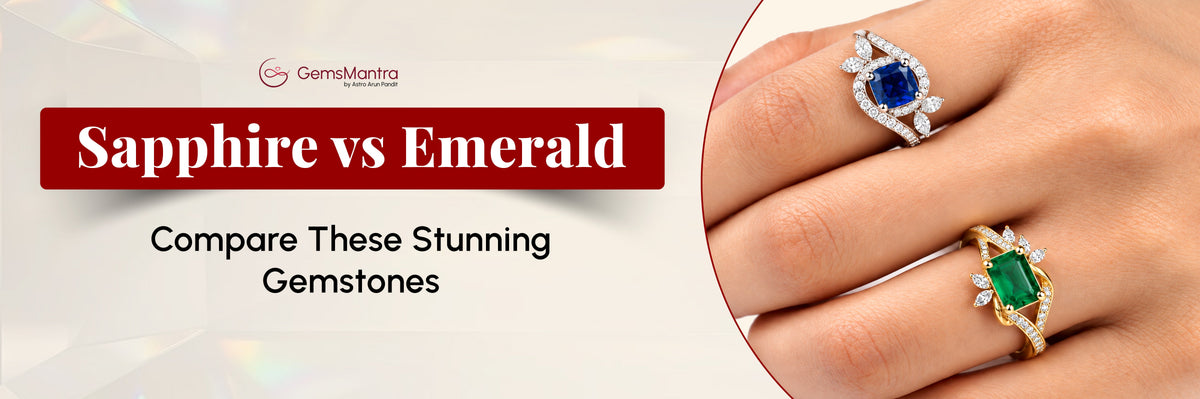
Sapphire vs Emerald - Compare These Stunning Gemstones
Quick Answer: Sapphire and Emerald are two popular gemstones with very different looks. Sapphire is best known for its blue variety, while Emerald is known for its green color. Sapphire is harder and generally easier to maintain for regular wear, while Emerald usually needs more care. Your choice can depend on color, jewellery style, gemstone quality, budget, and personal preference.
If you are comparing Sapphire vs Emerald, the first thing you will notice is their color. One is known for its beautiful blue shades, while the other is loved for its natural green appearance. But color is not the only difference.
Their hardness, clarity, appearance, care requirements, and traditional gemstone associations are also different. Knowing these points can make it easier to understand which gemstone suits your needs.
What Is the Difference Between Sapphire and Emerald?
Sapphire is a corundum gemstone, while Emerald is a green variety of beryl. Sapphire is commonly found in blue, although other colors also exist. Emerald is known for its green color.
Blue Sapphire is one of the most recognised Sapphire varieties. Emerald is usually valued for its green color, which can range from lighter green to deeper green shades.
Here is a quick comparison:
|
Feature |
Sapphire |
Emerald |
|
Mineral family |
Corundum |
Beryl |
|
Most recognised color |
Blue |
Green |
|
Popular variety |
Blue Sapphire |
Emerald stone |
|
Mohs hardness |
9 |
7.5–8 |
|
Common appearance |
Clear to included |
Often naturally included |
|
Traditional Vedic association |
Blue Sapphire – Saturn |
Emerald – Mercury |
|
Care |
Relatively easy |
Needs more care |
Which Is Harder, Sapphire or Emerald?
Sapphire is harder than Emerald.
Sapphire has a hardness of around 9 on the Mohs scale, while Emerald is generally around 7.5 to 8.
This difference matters when choosing jewellery for regular use. Sapphire is more resistant to everyday scratches, which is one reason it is commonly used in rings and other frequently worn jewellery.
Emerald is also suitable for jewellery, but it should be handled with more care.
What Is Blue Sapphire?
Blue Sapphire is the blue variety of Sapphire and is traditionally associated with Saturn in Vedic astrology.
Its blue color can vary from lighter blue to deeper shades. The appearance of a Blue Sapphire depends on factors such as color, clarity, cut, and overall quality.
Blue Sapphire is also called Neelam Stone in traditional Indian gemstone practices.
When buying one, it is useful to check whether the stone is natural, whether it has received any treatment, and whether a reliable laboratory report is available.
What Is Emerald Stone?
Emerald stone is a green variety of the mineral beryl and is traditionally associated with Mercury in Vedic astrology.
Natural Emeralds often contain internal features called inclusions. These inclusions are common in Emeralds and can form naturally while the gemstone develops.
Because of this, Emeralds do not always have the same type of clear appearance that buyers may expect from other gemstones.
The green color, clarity, cut, size, and treatment can all affect its appearance and value.
Is Sapphire Better Than Emerald for Daily Wear?
Sapphire is generally easier to use for regular-wear jewellery because it is harder than Emerald.
A Sapphire can be a practical option for jewellery that comes into contact with surfaces regularly. Its higher hardness gives it good resistance to everyday scratches.
Emerald can also be worn regularly, but it deserves a little more attention. It is better to avoid rough handling and store Emerald jewellery separately when it is not being worn.
The setting of the jewellery also matters. A well-made setting can provide additional protection to the gemstone.
Which Looks Better, Sapphire or Emerald?
There is no single answer because Sapphire and Emerald have very different appearances.
Blue Sapphire has a classic blue look that works well with both traditional and modern jewellery. Emerald has a green appearance that can give jewellery a fresh and distinctive look.
Your choice may simply come down to the color you enjoy wearing.
If you usually prefer blue jewellery, Sapphire may catch your attention first. If Green Stone is more your style, Emerald may be the better visual match.
Why Do Natural Emeralds Have Inclusions?
Natural Emeralds commonly have inclusions because they form naturally inside the Earth.
These internal features can look like tiny lines, clouds, or other patterns inside the gemstone. They are a familiar characteristic of many natural Emeralds.
For this reason, buyers should not expect every natural Emerald to be completely clear.
However, the type and amount of inclusions can still affect the gemstone’s appearance and durability. It is helpful to review the stone closely and check its certification before buying.
Which Is More Expensive: Sapphire or Emerald?
Neither Sapphire nor Emerald is always more expensive. Their prices depend on quality and other gemstone characteristics.
Some of the main factors include:
· Color
· Clarity
· Carat weight
· Cut
· Natural or laboratory-created status
· Treatment
· Origin, when documented
· Certification
A high-quality Sapphire can have a high price, while a fine Emerald can also be valuable. Comparing only the carat weight does not give a complete picture.
For example, two gemstones with the same carat weight may have very different prices because their color, clarity, treatment, and overall quality are different.
Can Sapphire and Emerald Be Worn Together?
Sapphire and Emerald can be combined in jewellery from a design perspective. For astrological use, gemstone combinations are traditionally considered separately.
Blue Sapphire is traditionally associated with Saturn, while Emerald is traditionally associated with Mercury.
People who follow Vedic astrology may consider their birth chart before selecting or combining gemstones. These traditional associations are part of astrological practice and are not guarantees of specific results.
If you are buying gemstones mainly for jewellery, the choice can simply be based on your preferred colors and design.
How Should Sapphire and Emerald Be Cared For?
Sapphire is generally easier to maintain because of its higher hardness. Still, regular cleaning and careful storage are useful for keeping jewellery looking good.
Emerald needs a little more attention. Avoid rough handling and keep it away from other harder gemstones that could scratch its surface.
For both gemstones:
· Store each piece separately.
· Keep jewellery away from harsh chemicals.
· Use a soft cloth for regular cleaning.
· Check the jewellery setting from time to time.
· Follow the care instructions provided with the gemstone.
If you are unsure about cleaning a valuable Emerald, professional jewellery cleaning is a safer option than using strong household cleaners.
How Do You Choose Between Sapphire and Emerald?
Choose based on your preferred color, jewellery use, gemstone quality, and personal requirements.
Sapphire may suit you if you want:
· A blue gemstone
· A harder gemstone for regular wear
· A classic look for rings or other jewellery
· Blue Sapphire for traditional astrological purposes
Emerald may suit you if you want:
· A green gemstone
· A naturally distinctive appearance
· A gemstone with characteristic inclusions
· Emerald for traditional astrological purposes
If your main reason for buying a gemstone is astrology, you may want to seek individual guidance rather than choosing a stone based only on its popularity.
What Should You Check Before Buying Sapphire or Emerald?
Before purchasing either gemstone, check the basic details carefully.
Natural or synthetic: Find out how the gemstone has been identified.
Treatment: Ask whether the stone has undergone any treatment that changes its appearance.
Certification: A laboratory report can help confirm important details about the gemstone.
Color and clarity: Look at the gemstone in good lighting and check its overall appearance.
Seller information: Buy from a seller that clearly provides gemstone details and certification information.
At GemsMantra, you can compare gemstone options along with available certification and product details before making a purchase.
Sapphire vs Emerald: Which One Should You Choose?
Sapphire and Emerald are both popular for different reasons. Sapphire is harder and is well known for its blue varieties, while Emerald stands out for its green color and natural inclusions.
There is no need to choose a gemstone simply because it is more popular. Think about the color you like, how often you plan to wear it, the quality you want, and your budget.
If you are choosing for traditional astrological reasons, consider the relevant astrological guidance as well.
Note: Whether you select a Blue Sapphire or Emerald stone, always check the gemstone details, treatment information, and available certification before purchasing. A clear understanding of what you are buying can help you make a more informed choice.
Written by Bhupesh Bhandari


Key Highlights
- What Is the Difference Between Sapphire and Emerald?
- Which Is Harder, Sapphire or Emerald?
- What Is Blue Sapphire?
- What Is Emerald Stone?
- Is Sapphire Better Than Emerald for Daily Wear?
- Which Looks Better, Sapphire or Emerald?
- Why Do Natural Emeralds Have Inclusions?
- Which Is More Expensive: Sapphire or Emerald?
- Can Sapphire and Emerald Be Worn Together?
- How Should Sapphire and Emerald Be Cared For?
- How Do You Choose Between Sapphire and Emerald?
- What Should You Check Before Buying Sapphire or Emerald?
- Sapphire vs Emerald: Which One Should You Choose?


