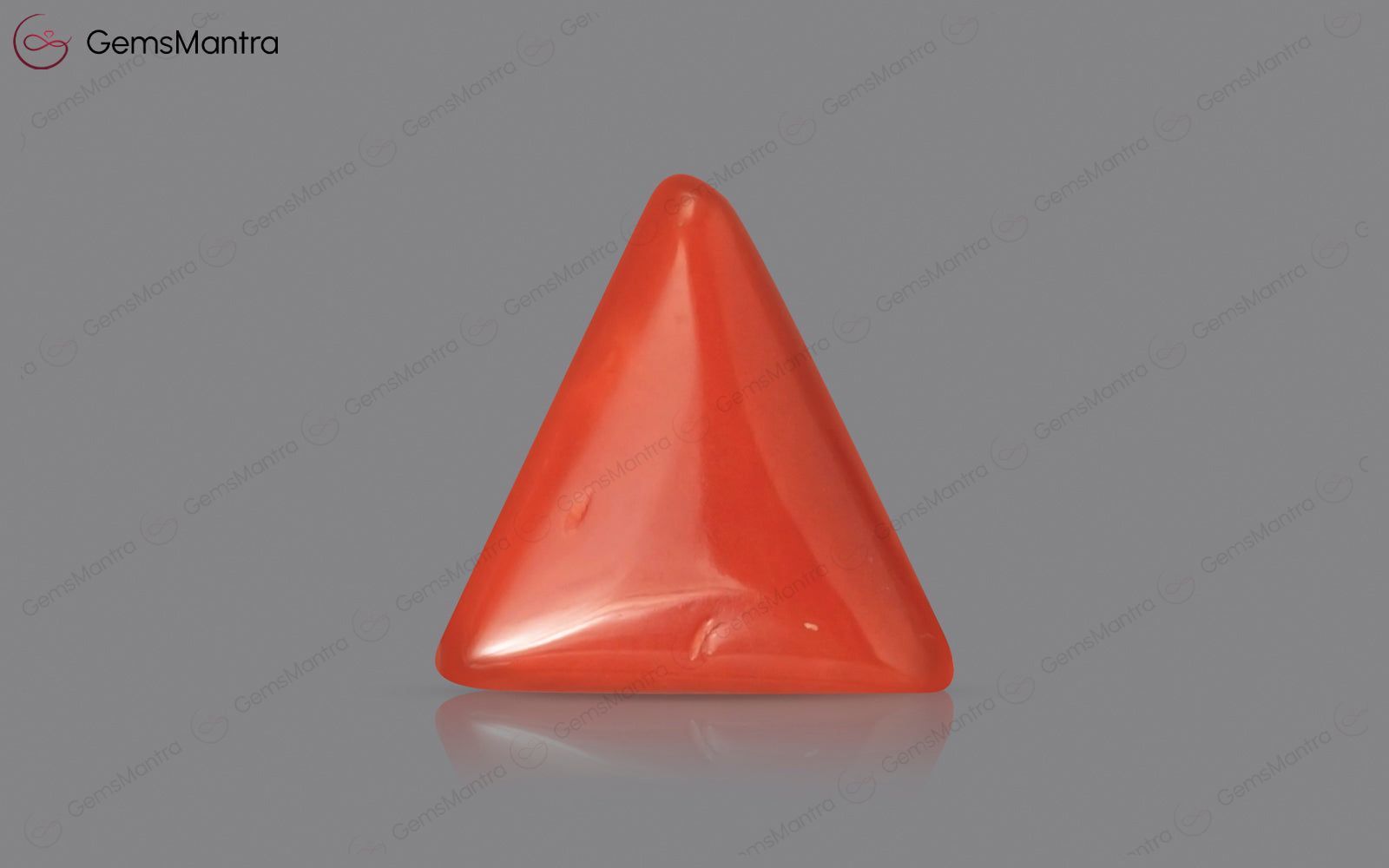
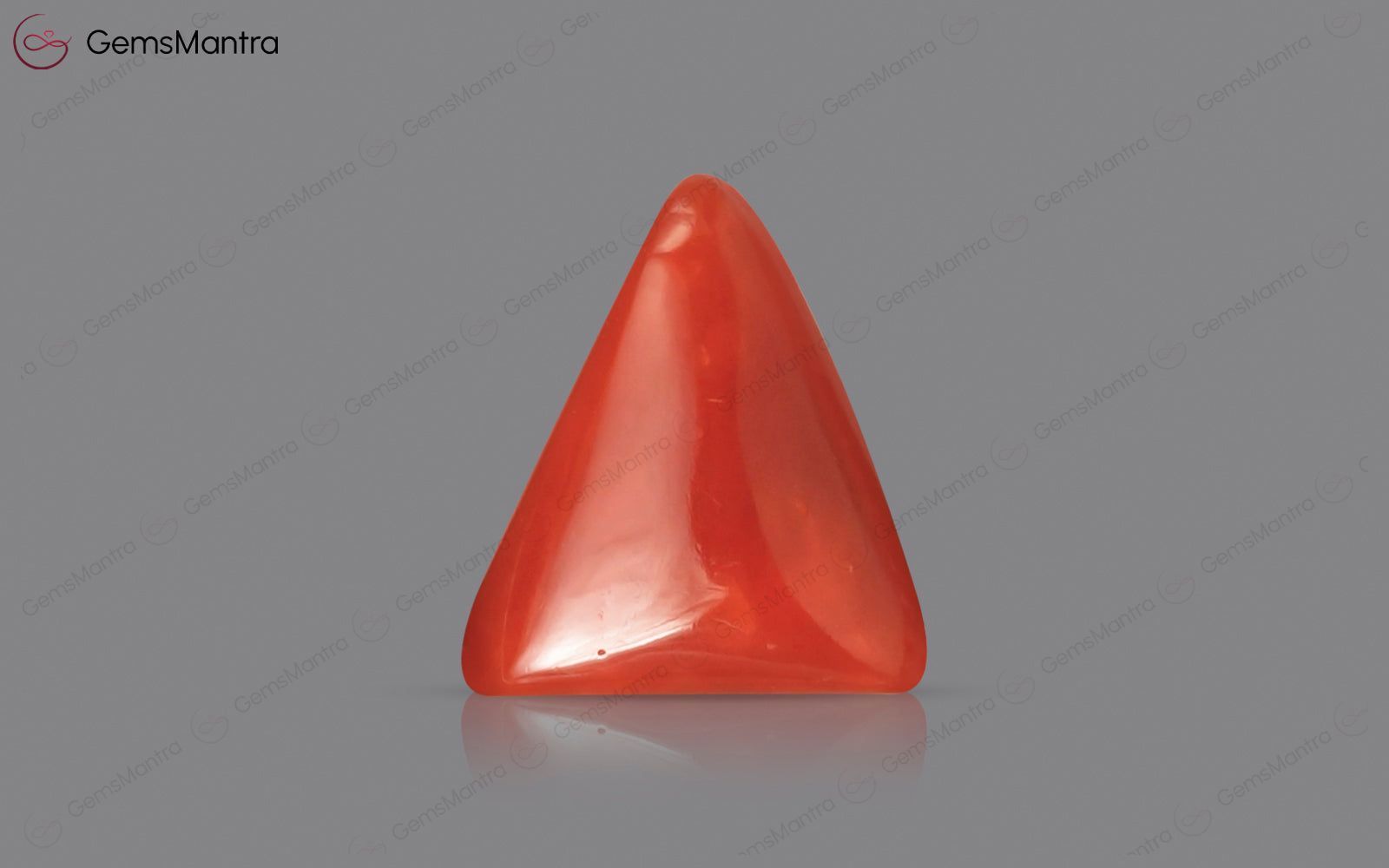
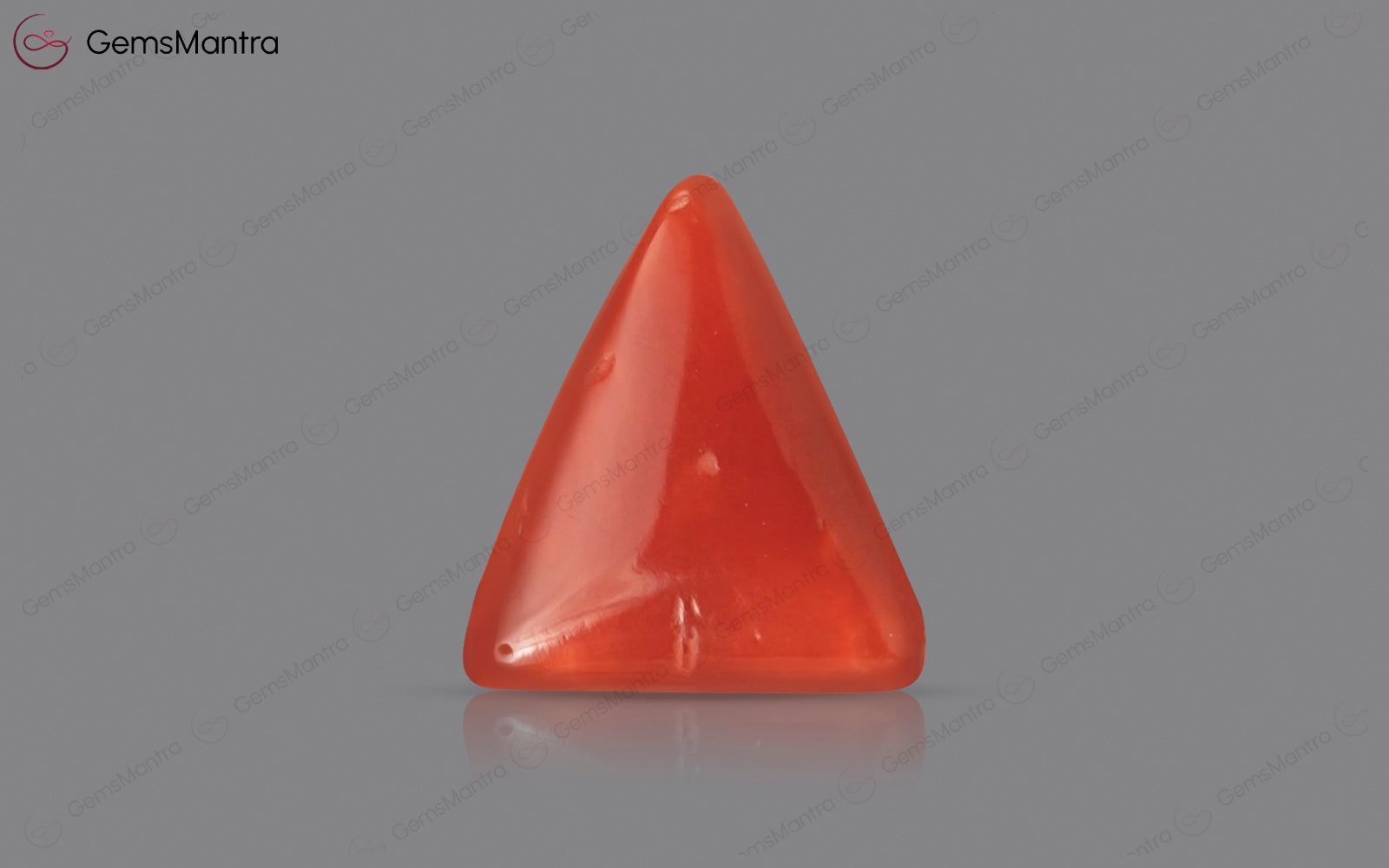
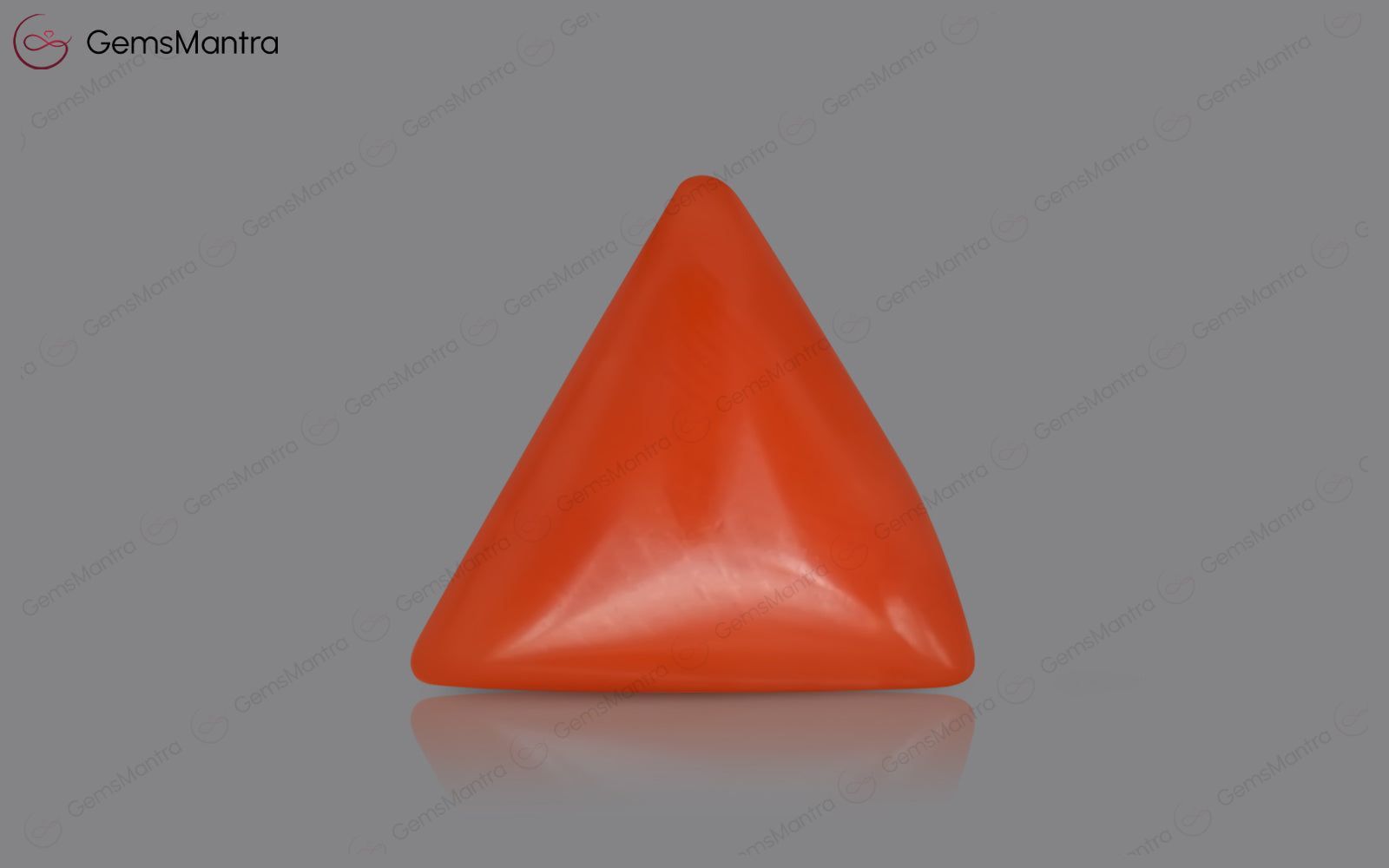
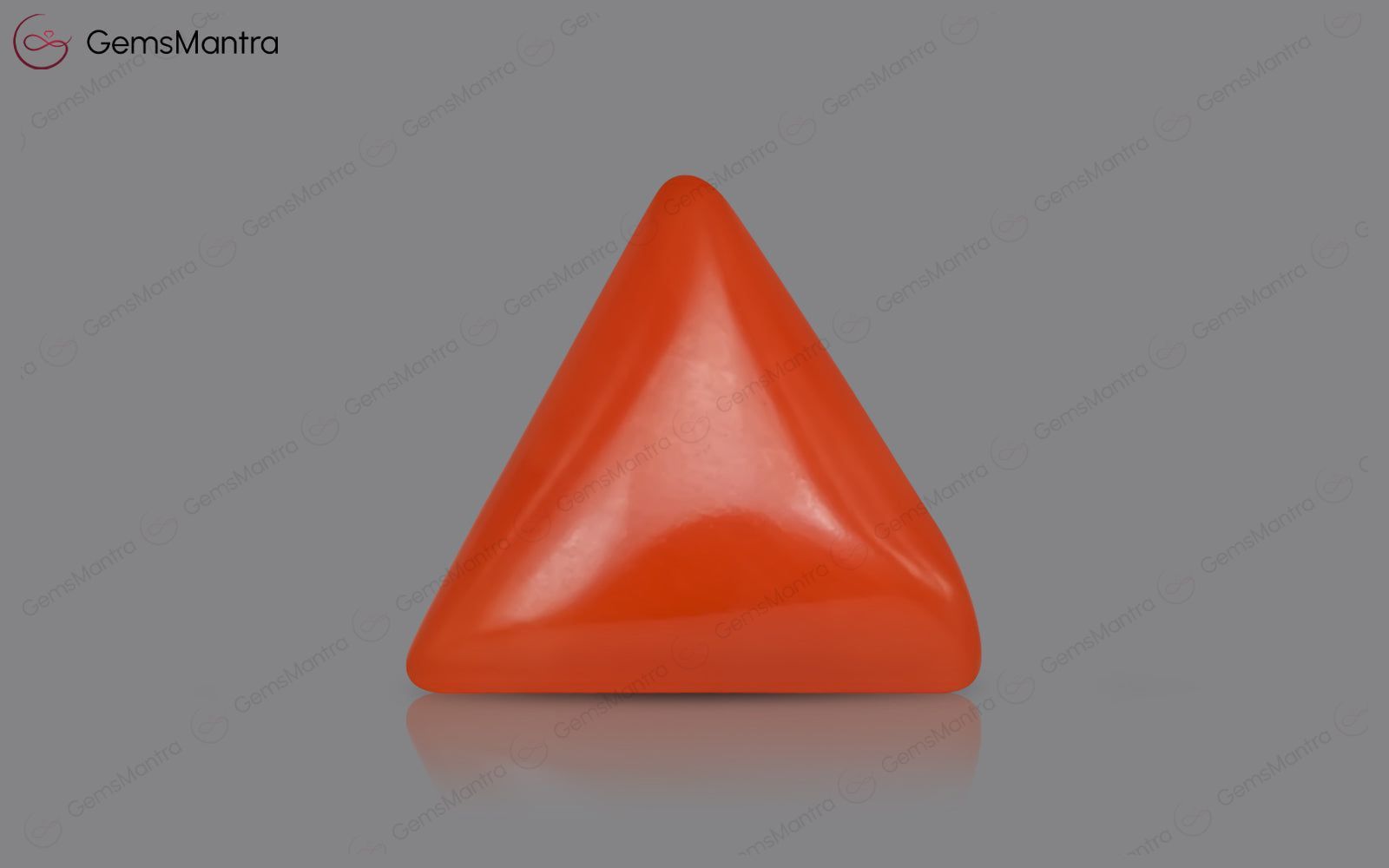
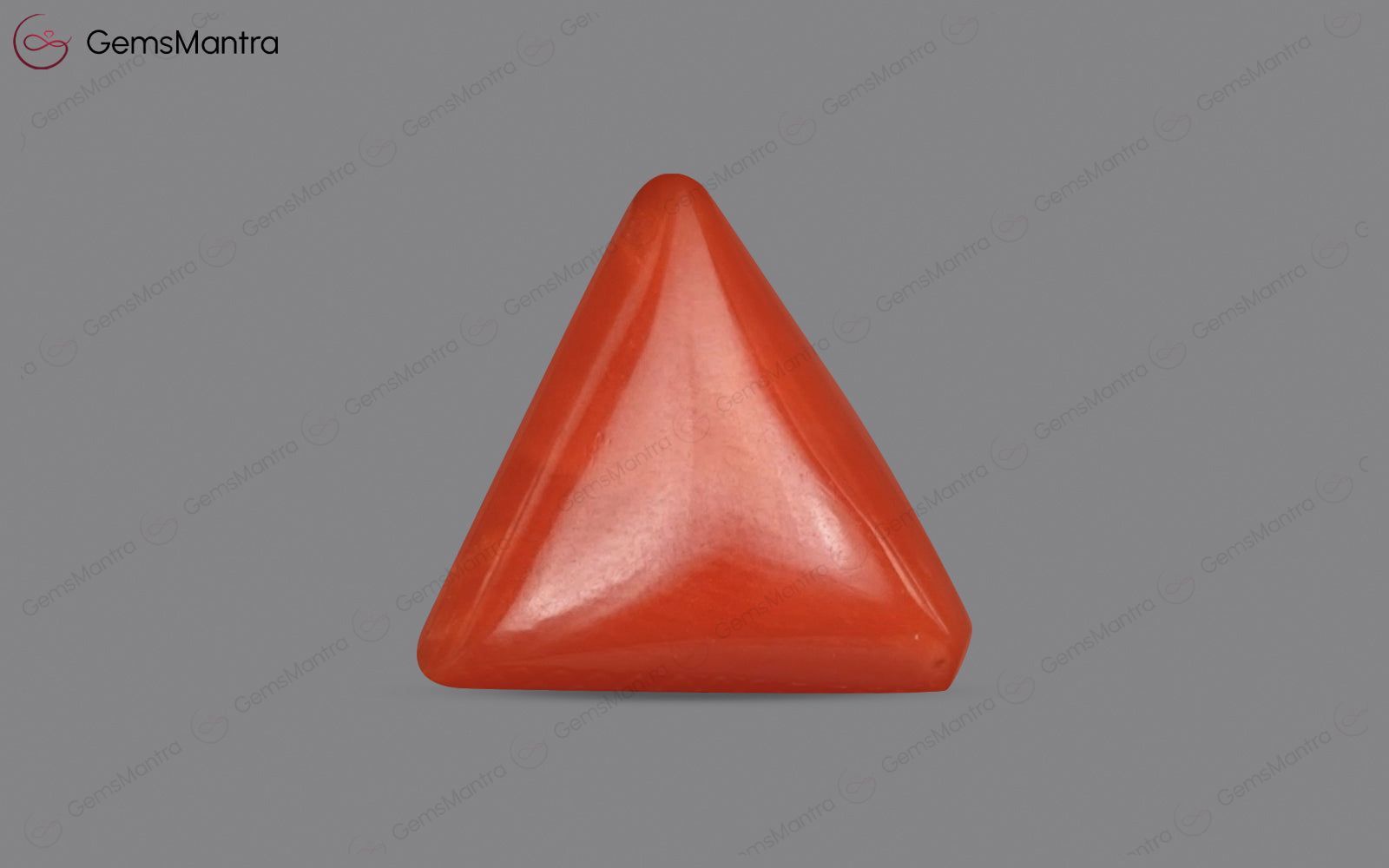
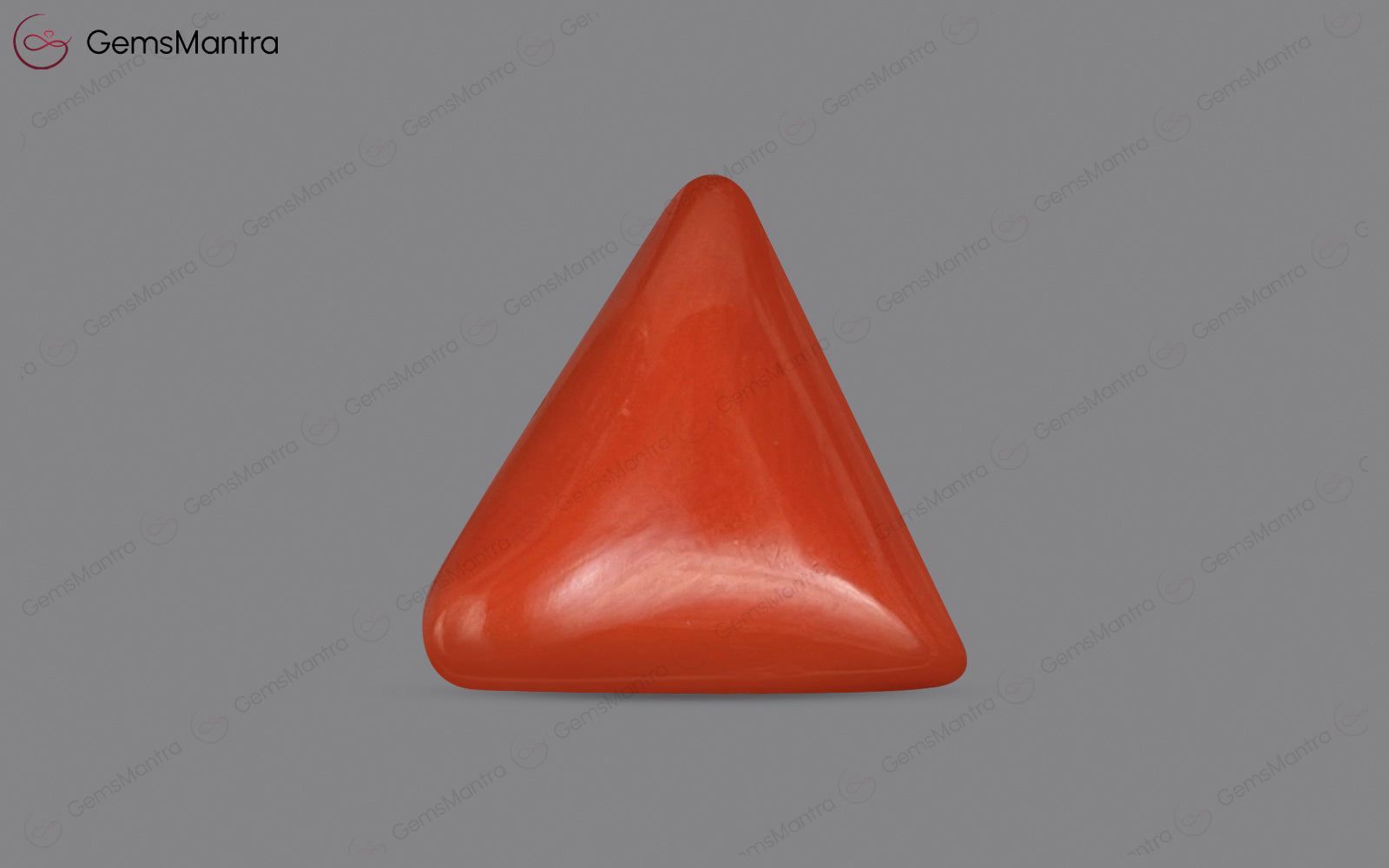
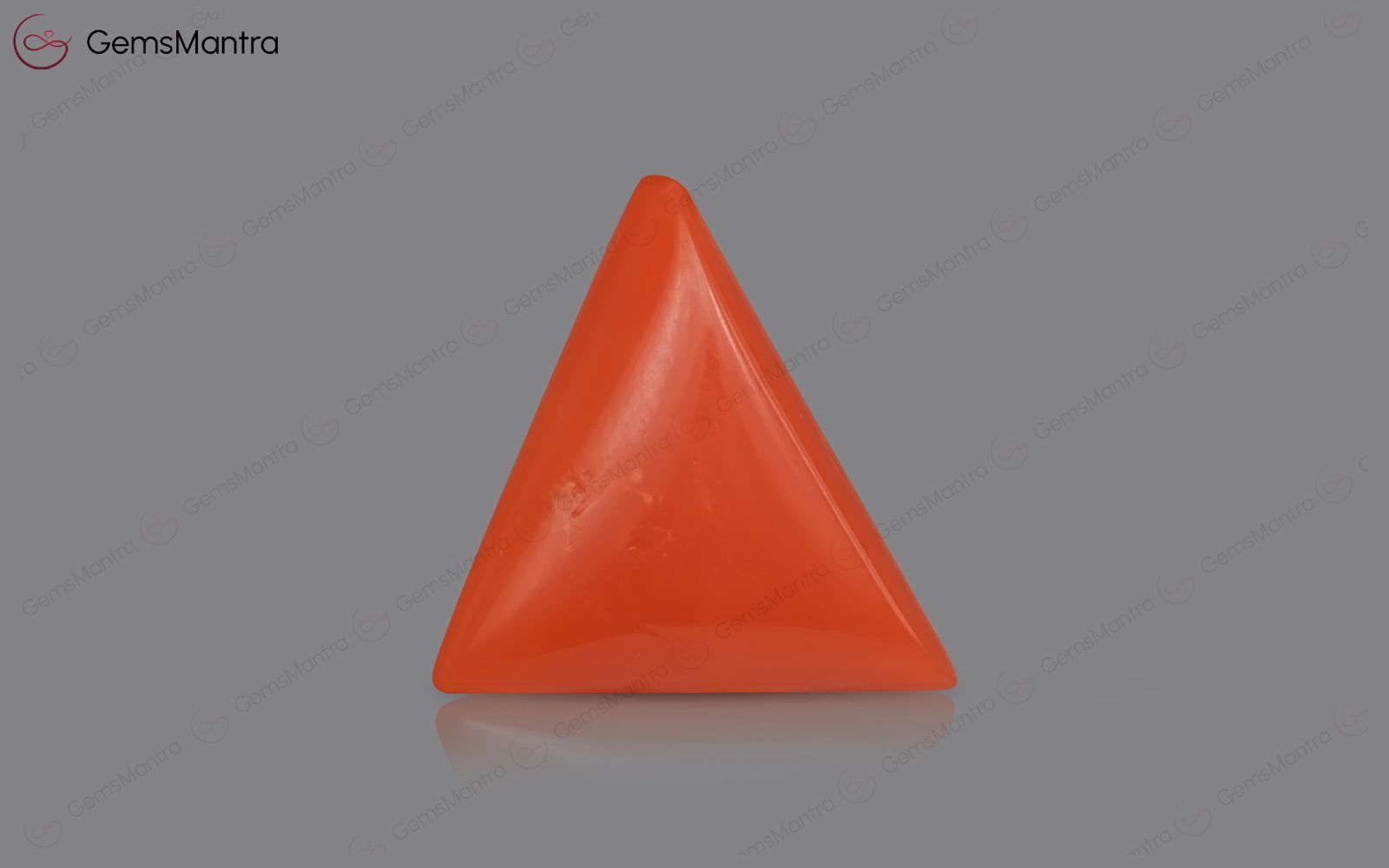
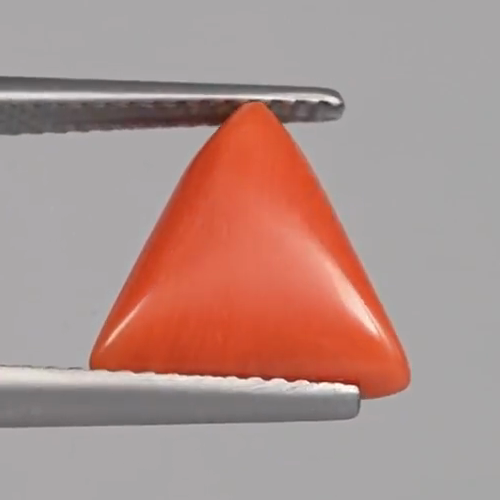
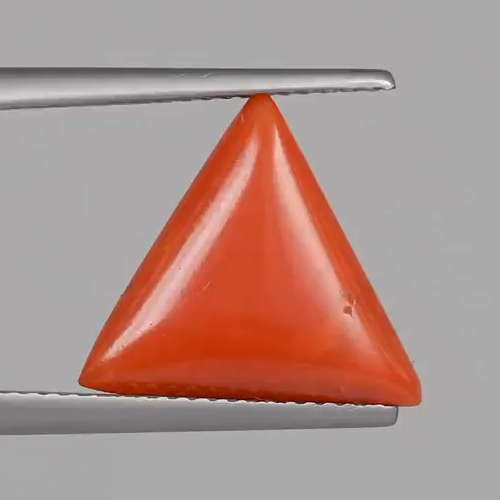
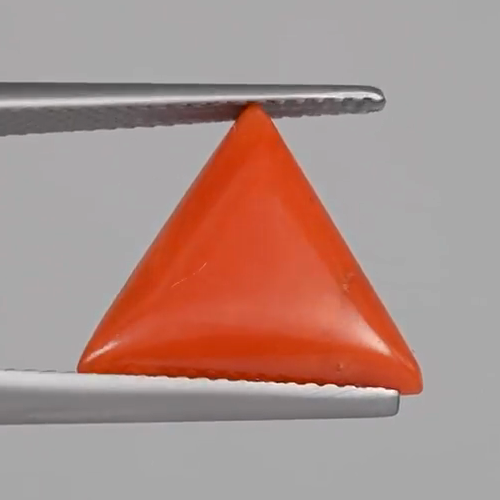
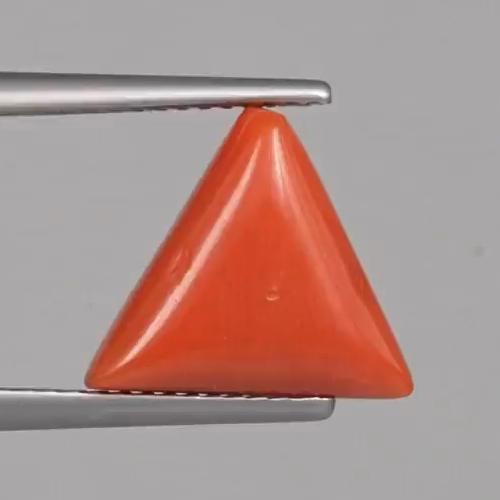
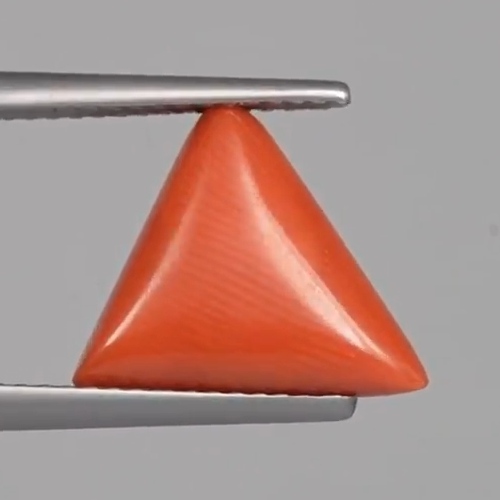
Moonga (Red Coral) vs Carnelian: Difference & Which to Wear
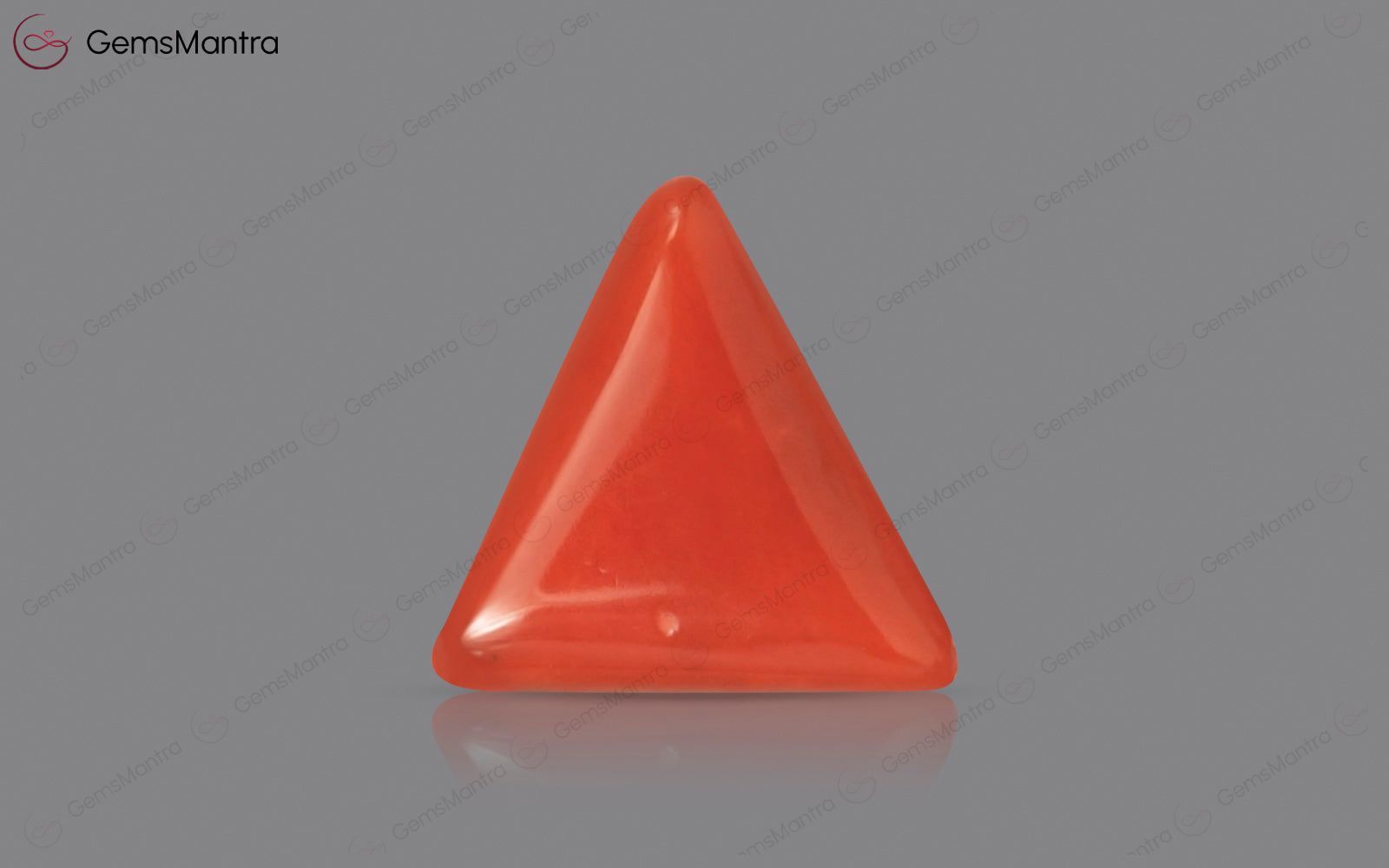
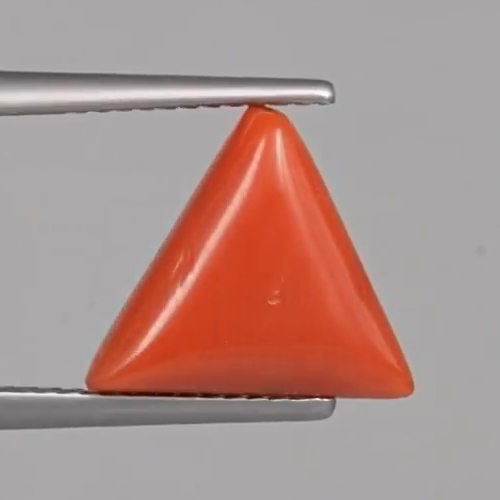
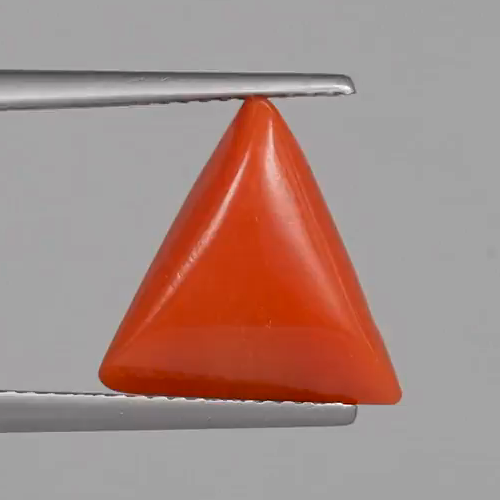
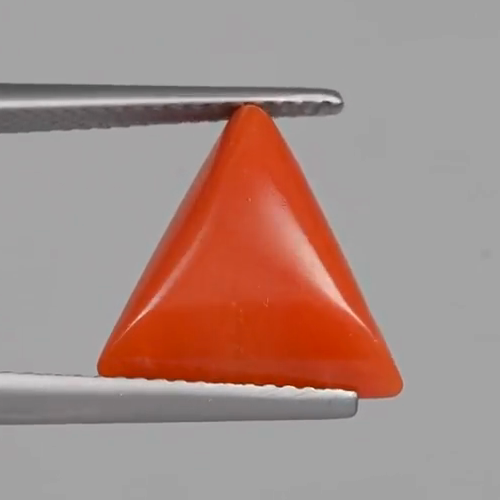
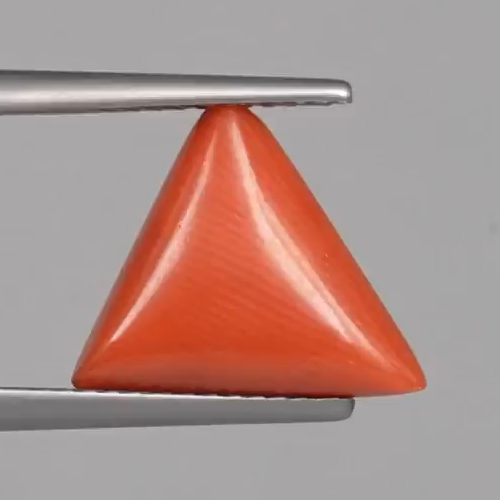
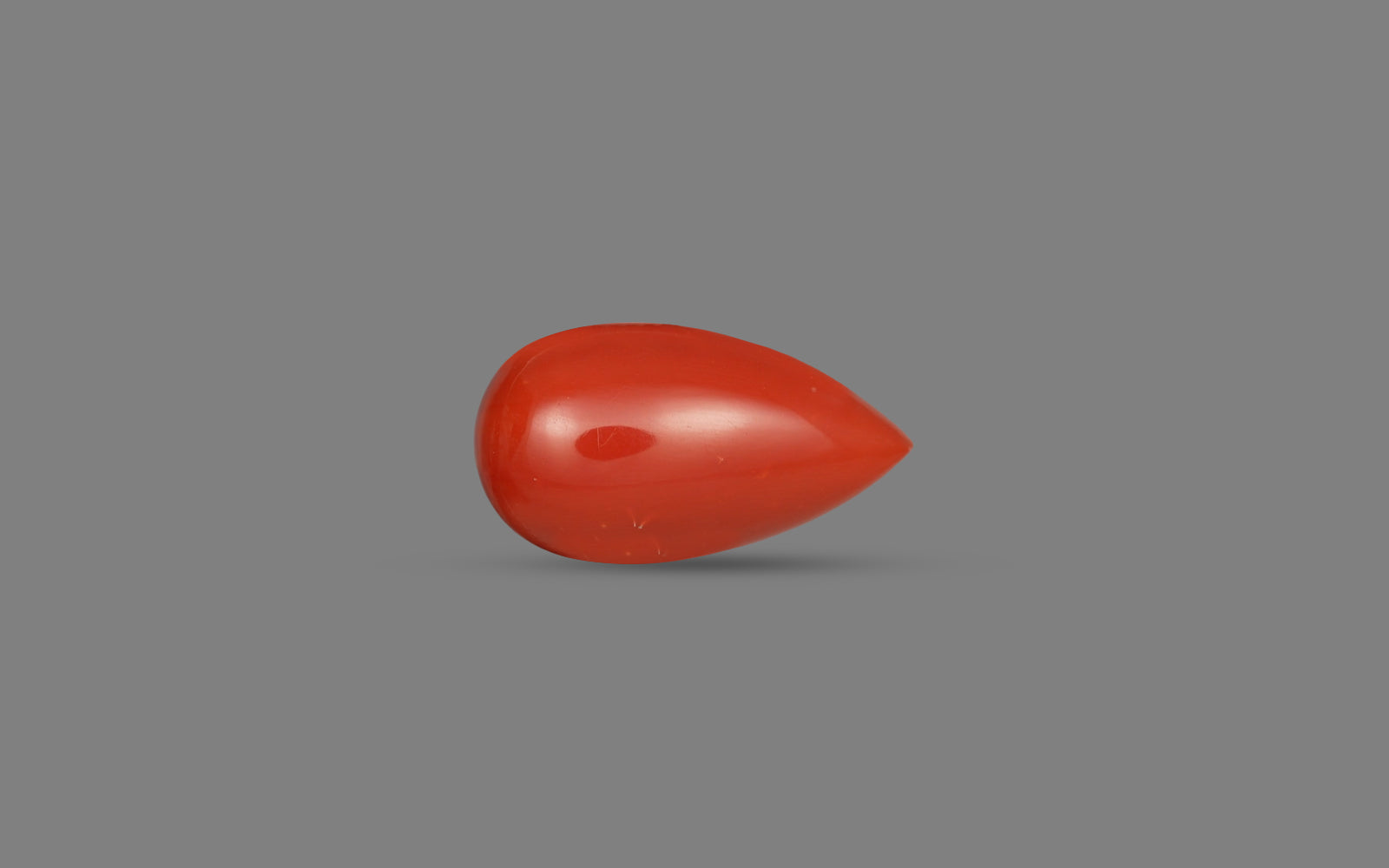
Moonga (Red Coral) and Carnelian are both warm red-orange stones, and both are worn for energy and drive, so people often ask if they are the same or if one can replace the other. They are not the same. Moonga is an organic coral and the classical gem of Mars (Mangal) among the Navratna. Carnelian is a common quartz that is far cheaper and, at best, a budget stand-in. Here is how they really compare, and which one you should wear.
Want the real Mars stone? Browse certified natural Moonga (Red Coral), each one verified with a certificate you can check.
Moonga vs Carnelian at a glance
| Property | Moonga (Red Coral) | Carnelian |
|---|---|---|
| Type | Organic gem (formed in the sea) | Mineral (chalcedony quartz) |
| Hardness (Mohs) | 3 to 4 (soft) | 6.5 to 7 |
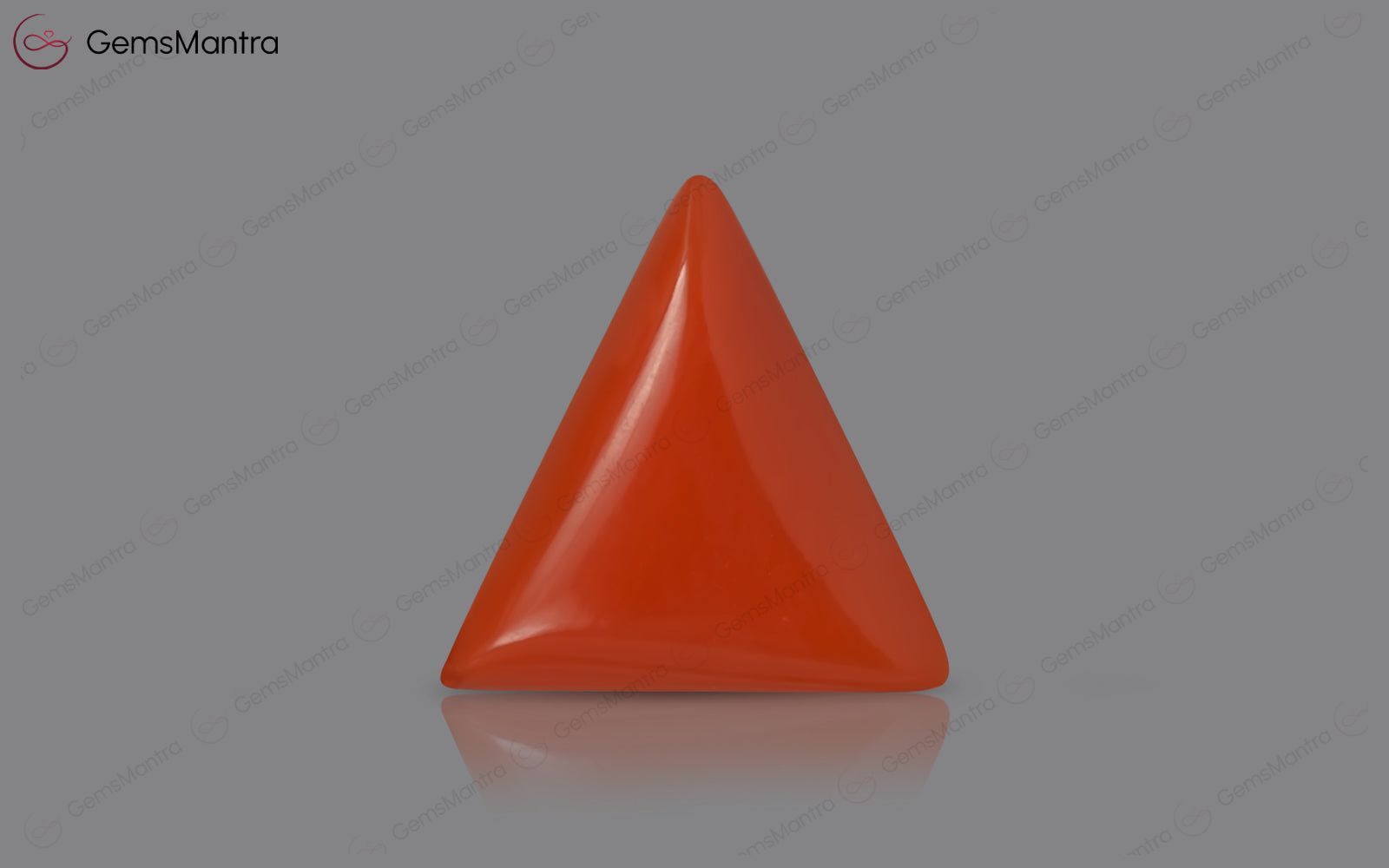
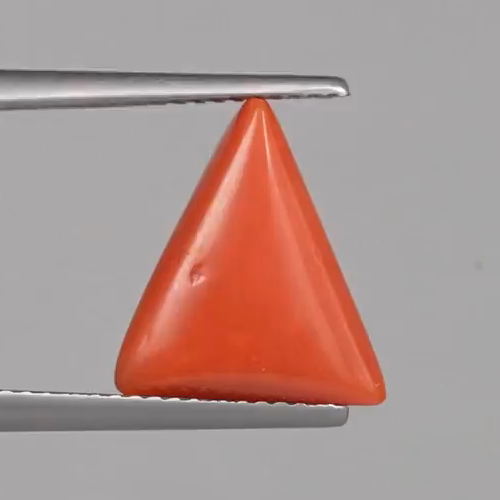
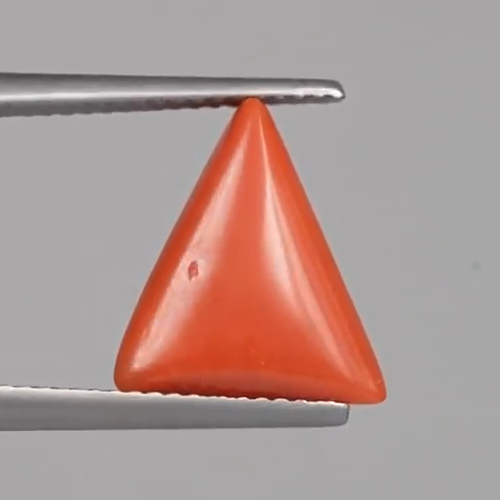
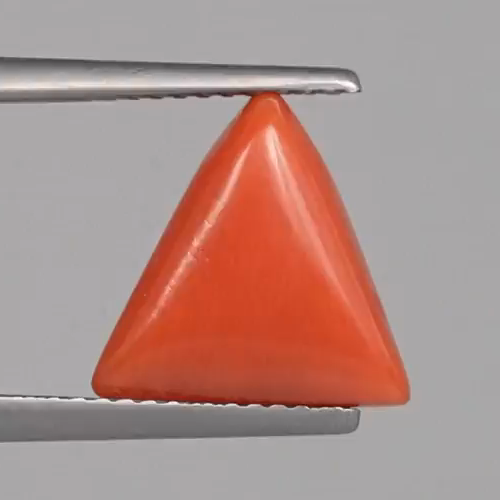
| Colour | Deep red to orange-red | Orange to brownish-red |
| Category | Precious, one of the nine Navratna | Semi-precious |
| Ruling planet | Mars (Mangal), the classical gem | Budget substitute at best |
| Typical price / carat | ₹800 to ₹6,000+ | ₹100 to ₹500 |
| Astrological strength | Full Mars remedy | Milder, gentler |
Why people mix them up
Both are that warm, fiery red-orange, and both are linked to energy and courage, so it is easy to see the overlap. But coral is grown in the sea by living organisms, while carnelian is a quartz dug from the ground. Carnelian is also a fraction of the price, which is why it sometimes appears in place of coral. For colour that is fine. For a Mars remedy, coral is the classical stone.
Carnelian is a lovely, affordable red stone, but moonga is the classical Mars gem. For a Mangal remedy, choose coral.
Which should you wear?
For a Mars (Mangal) remedy, worn for courage, energy, confidence and drive, and often for Mangal dosha, choose a certified natural Moonga (Red Coral). It is the classical Navratna gem of Mars. Carnelian is worn in some traditions as a lighter, budget substitute, and it is a fine stone for everyday energy, but it is gentler and not the traditional Mars remedy. Because Mars is a fiery planet, coral is best worn on an astrologer's advice. Note that coral is soft at 3 to 4, so it needs gentle care either way.
How to tell Moonga from Carnelian
- Read the certificate. A genuine report will say whether the stone is natural coral or carnelian (quartz).
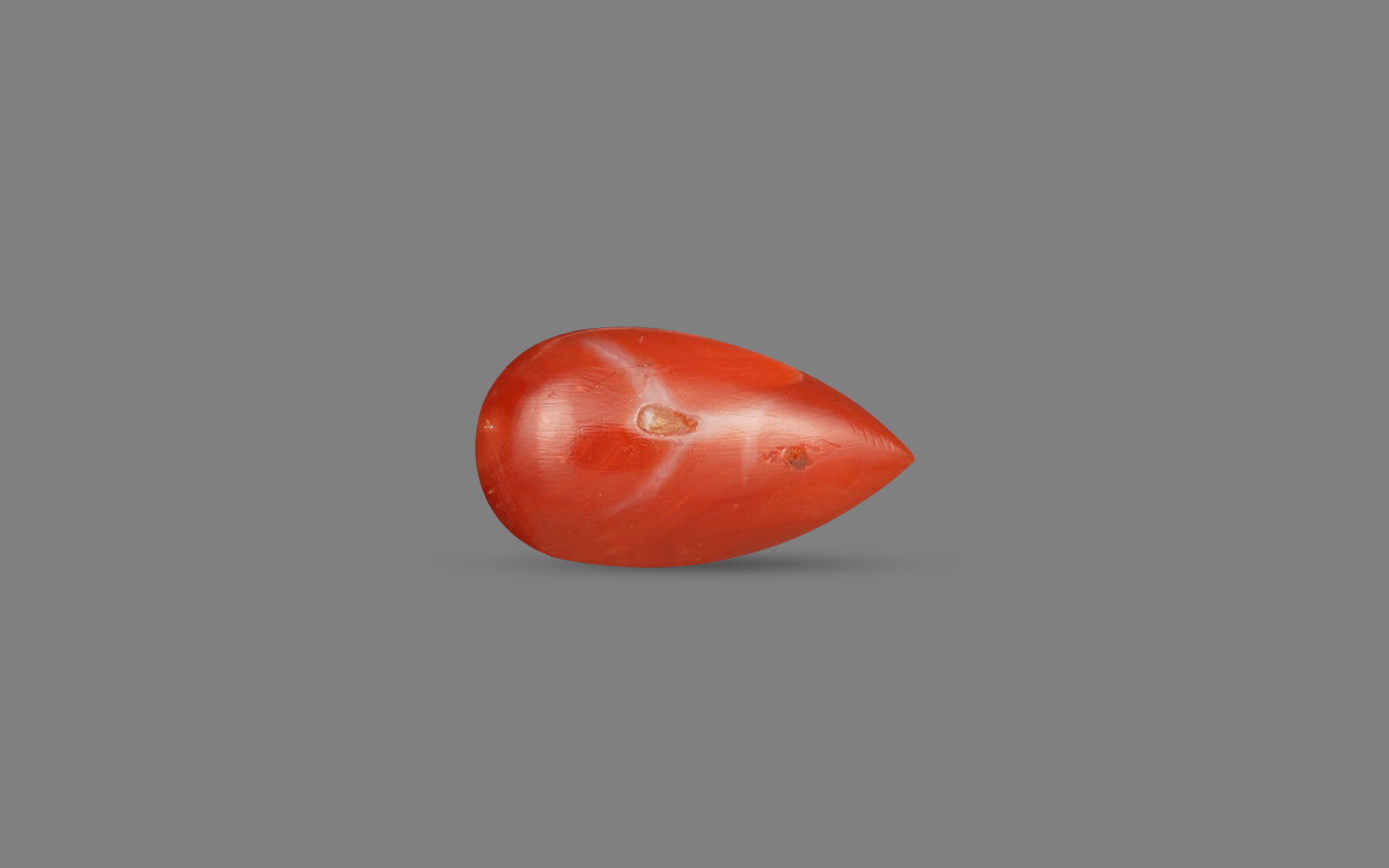
- Look at the surface. Coral often shows fine natural grain or tiny pits. Carnelian is a glassy, banded quartz.
- Hardness. Coral is soft at 3 to 4, while carnelian is harder at 6.5 to 7.
- Prefer lab verification over a seller's word, as dyed and pressed coral is common.
The GemsMantra standard
From a 53-year family lineage of Vedic practice, every Moonga is individually verified and ships with a certificate carrying a verifiable report number, so you know you are wearing genuine natural coral.
Common questions
Is carnelian the same as red coral?
No. Red Coral (Moonga) is an organic gem from the sea, while carnelian is a chalcedony quartz. They share a red-orange colour, but their type, hardness, price and astrological use differ.
Can I wear carnelian instead of moonga?
Carnelian is worn in some traditions as a lighter, budget substitute for Mars, but it is gentler than natural coral. For the full remedy, moonga is preferred. Confirm with an astrologer.
How do I tell coral from carnelian?
Check the certificate, and look at the stone. Coral shows fine natural grain or pits and is soft, while carnelian is a harder, glassy banded quartz.
Why is carnelian cheaper than coral?
Carnelian is a common quartz, while good natural coral is rarer and organic, which is why moonga costs more per carat.
Which is better for astrology?
Moonga (Red Coral), for a Mars (Mangal) remedy. Carnelian is best seen as a gentle, budget substitute.
Wear the real Mars stone
Certified natural Moonga, individually verified, with a certificate you can check.
Explore certified MoongaRed Coral benefits guideRelated guides
Red Coral (Moonga): Benefits, Price & Who Should Wear · Carnelian Stone Benefits · Which Gemstone for Which Planet?
Gemstone and planetary associations described here reflect traditional Vedic beliefs and practices. They are not medical, financial or legal advice and are not presented as guaranteed outcomes. Prices are indicative ranges only and vary by quality and origin. Please consult a qualified astrologer before wearing any gemstone.
Written by Shruti Tiwari


%20and%20Carnelian%20are%20both%20warm%20red-orange%20stones,%20and%20both%20are%20worn%20for%20energy%20and%20drive,%20so%20people%20often%20ask%20if%20they%20are%20the%20same%20or%20if%20one%20can%20replace%20the%20other.%20They%20are%20not%20the...)


![Pearls (Moti) – 4.67 Carat / 5.1 Ratti [GM09958] – view 2](http://gemsmantra.com/cdn/shop/files/GM09909_BACK_09098aab-2edc-4bd3-9a21-edfb80d9607e.jpg?v=1780376524&width=1600)
![Pearls (Moti) – 4.67 Carat / 5.1 Ratti [GM09958] – GemsMantra](http://gemsmantra.com/cdn/shop/files/GM09909_FRONT_12e33cb9-f6a5-4e24-8f0b-b5478b5e2501.jpg?v=1780376524&width=1600)
![Gomed – 5.815 Carat / 6.4 Ratti [GM09242] – Hessonite – GemsMantra](http://gemsmantra.com/cdn/shop/files/FRONT_GM09242_bda7f3f4-2b7e-4e05-bf24-125035a4522a.jpg?v=1773224043&width=1600)
![Gomed – 5.815 Carat / 6.4 Ratti [GM09242] – view 2](http://gemsmantra.com/cdn/shop/files/GM09242.jpg?v=1783417342&width=1040)
![Keshi Pearls (Moti) – 4.41 Carat / 4.9 Ratti [GM09826] – view 2](http://gemsmantra.com/cdn/shop/files/GM09826_BACK_8d3ab21b-fe0f-46d9-8a57-611ac8591e7a.jpg?v=1780640983&width=1600)
![Keshi Pearls (Moti) – 4.41 Carat / 4.9 Ratti [GM09826] – GemsMantra](http://gemsmantra.com/cdn/shop/files/GM09826_FRONT_6698404e-2267-4bac-8565-71c2fe9ebf6e.jpg?v=1780640983&width=1600)
![Keshi Pearls (Moti) – 5.18 Carat / 5.7 Ratti [GM09820] – view 2](http://gemsmantra.com/cdn/shop/files/GM09820_BACK_939b991d-ce86-4751-b091-d0173b8db0a7.jpg?v=1780640943&width=1600)
![Keshi Pearls (Moti) – 5.18 Carat / 5.7 Ratti [GM09820] – GemsMantra](http://gemsmantra.com/cdn/shop/files/GM09820_FRONT_f6374281-801f-40c0-a329-cbaf3690343f.jpg?v=1780640943&width=1600)
![Pearls (Moti) – 4.59 Carat / 5 Ratti [GM09910] – view 2](http://gemsmantra.com/cdn/shop/files/GM09910_BACK_9281c5aa-1222-4686-b1a6-f27bc793ffdb.jpg?v=1780376441&width=1600)
![Pearls (Moti) – 4.59 Carat / 5 Ratti [GM09910] – GemsMantra](http://gemsmantra.com/cdn/shop/files/GM09910_FRONT_23e54297-857d-4453-9eec-a82ff7e8d0d6.jpg?v=1780376442&width=1600)
![Blue Sapphire (Neelam) – 6.3 Carat / 6.9 Ratti [GM08004]](http://gemsmantra.com/cdn/shop/files/front_c0499602-70a6-4cda-ac32-a129b35f6c2f.jpg?v=1790658613&width=2000)
![Blue Sapphire (Neelam) – 6.3 Carat / 6.9 Ratti [GM08004]](http://gemsmantra.com/cdn/shop/files/back_a12a7cb3-4ef2-4ca2-a9e6-ac406564e1e2.jpg?v=1790658613&width=2000)
![Blue Sapphire (Neelam) – 3.9 Carat / 4.3 Ratti [GM08023]](http://gemsmantra.com/cdn/shop/files/front_f6e67bad-5fb2-412d-af59-31b58bf1e630.jpg?v=1790660461&width=2000)
![Blue Sapphire (Neelam) – 3.9 Carat / 4.3 Ratti [GM08023]](http://gemsmantra.com/cdn/shop/files/back_df9ab0f8-3b8d-440b-8220-a925a2524143.jpg?v=1790660461&width=2000)
![Ruby (Manik) – 3.45 Carat / 3.8 Ratti [GM09653] – GemsMantra](http://gemsmantra.com/cdn/shop/files/GM09653_FRONT_fc0ca4bb-2b2b-4669-baa2-eb3b923cf711.jpg?v=1782816065&width=1600)
![Ruby (Manik) – 3.45 Carat / 3.8 Ratti [GM09653] – view 2](http://gemsmantra.com/cdn/shop/files/GM09653_BACK_43c51cac-1e77-4b0e-a083-16e7a0dcbe22.jpg?v=1782816065&width=1600)
![Citrine (Sunela) – 8.84 Carat / 9.7 Ratti [GM09257]](http://gemsmantra.com/cdn/shop/files/front_d4ec1aae-ebd2-4b23-9677-929e36818f26.jpg?v=1791266623&width=2000)
![Citrine (Sunela) – 8.84 Carat / 9.7 Ratti [GM09257]](http://gemsmantra.com/cdn/shop/files/preview_images/02e04f6a074a4a95b2d74b7f97ade90d.thumbnail.0000000000.jpg?v=1786969348)

![Opal – 5.46 Carat / 6 Ratti [GM09925] – GemsMantra](http://gemsmantra.com/cdn/shop/files/GM09925_FRONT_5bccd8be-1e7f-4361-93ed-20fcfbb3d33b.jpg?v=1780379315&width=1600)
![Blue Sapphire (Neelam) – 4.04 Carat / 4.4 Ratti [GM02668]](http://gemsmantra.com/cdn/shop/files/front_f50f64e4-8906-4e4a-a3a5-3844f4b96a3c.jpg?v=1790589204&width=2000)
![Blue Sapphire (Neelam) – 4.04 Carat / 4.4 Ratti [GM02668]](http://gemsmantra.com/cdn/shop/files/back_e2ae0118-f8f6-4e31-94ff-e3095dc7f289.jpg?v=1790589204&width=2000)
![Red Coral (Moonga) – 5.42 Carat / 6 Ratti [GM10098] – GemsMantra](http://gemsmantra.com/cdn/shop/files/GM10098_FRONT_bd5c0cc5-5af1-494c-b720-908abfbeaf5b.jpg?v=1782816352&width=1600)
![Red Coral (Moonga) – 5.42 Carat / 6 Ratti [GM10098] – view 2](http://gemsmantra.com/cdn/shop/files/GM10098_BACK_754f039f-a06c-4ad0-b5d6-d5df089cb4f2.jpg?v=1782816352&width=1600)

![Blue Sapphire (Neelam) – 5.14 Carat / 5.7 Ratti [GM08001]](http://gemsmantra.com/cdn/shop/files/front_7a54710f-91d4-42e0-80ba-86d47f53485d.jpg?v=1790598520&width=2000)
![Blue Sapphire (Neelam) – 5.14 Carat / 5.7 Ratti [GM08001]](http://gemsmantra.com/cdn/shop/files/back_da6e5d62-9f94-4f74-ae14-b84f97e102d5.jpg?v=1790598520&width=2000)
![Blue Sapphire (Neelam) – 3.63 Carat / 4 Ratti [GM02698]](http://gemsmantra.com/cdn/shop/files/front_7e25486d-1fb8-463f-bcb9-48c96c1235cc.jpg?v=1790596029&width=2000)
![Blue Sapphire (Neelam) – 3.63 Carat / 4 Ratti [GM02698]](http://gemsmantra.com/cdn/shop/files/back_df5d9e4d-6502-4be5-b552-c5ce5256111b.jpg?v=1790596029&width=2000)