
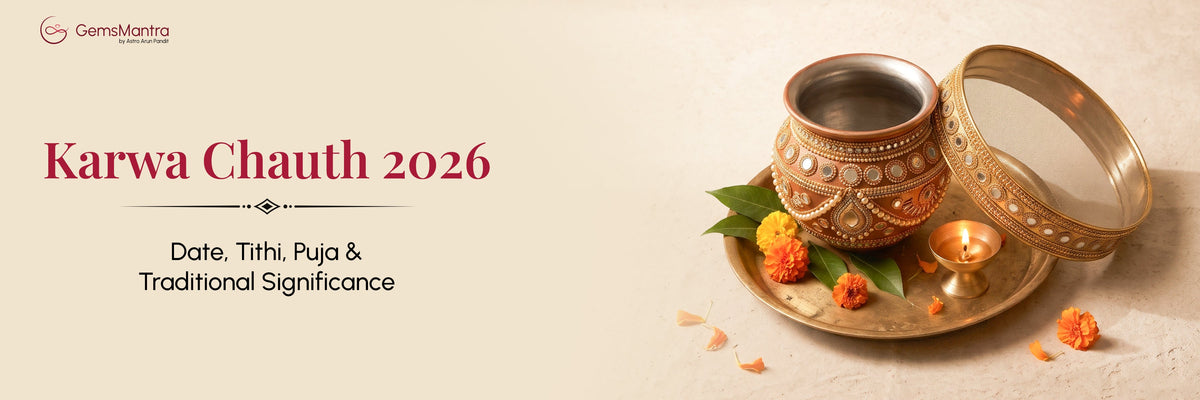
Karwa Chauth 2026 Date, Tithi, Puja & Traditional Significance
Karwa Chauth 2026 will be observed on Thursday, 29 October 2026. On this day, married women traditionally observe a fast from sunrise until moonrise and pray for their husband's long life and well-being. In New Delhi, the Karwa Chauth tithi lasts from 1:06 AM to 10:09 PM, while moonrise is expected at around 8:17 PM.
Here is everything you need to know about the date, tithi, puja and traditions of the day.
Karwa Chauth 2026 Date and Puja Muhurat
|
Detail |
Timing (New Delhi) |
|
Karwa Chauth Date |
Thursday, 29 October 2026 |
|
Karwa Chauth Tithi (Krishna Chaturthi) |
1:06 AM to 10:09 PM |
|
Karwa Chauth Puja Muhurat |
5:38 PM to 6:56 PM |
|
Moonrise |
About 8:17 PM |
Moonrise, sunrise and puja timings vary by location. For example, moonrise is around 9:00 PM in Mumbai, compared with 8:17 PM in Delhi. So, always check the local panchang for your city before planning the puja.
What Is the Karwa Chauth Tithi?
Karwa Chauth is observed on Kartik month’s Krishna Paksha Chaturthi, the fourth lunar day of the waning Moon. In 2026, Chaturthi begins at 1:06 AM and ends at 10:09 PM on 29 October. This means the vrat, evening puja and moon sighting all fall on 29th October.
Karwa Chauth also coincides with Vakratunda Sankashti Chaturthi, a day associated with Lord Ganesha. Lord Shiva, Goddess Parvati and Lord Ganesha are traditionally worshipped during Karwa Chauth puja.
Karwa Chauth Puja Vidhi
The main Karwa Chauth puja is performed during the evening muhurat. While customs may differ slightly between families and regions, the day generally follows this sequence:
|
Step |
What Happens |
|
Sargi |
A pre-sunrise meal traditionally eaten before beginning the fast |
|
Sankalp |
Taking a resolve to observe the Karwa Chauth vrat |
|
Shringar |
Getting ready for the evening puja with traditional ornaments |
|
Puja |
Worshipping Shiva, Parvati and Ganesha and listening to the Karwa Chauth Katha |
|
Moon sighting |
Traditionally viewing the Moon through a sieve after moonrise |
|
Arghya and Parana |
Offering water to the Moon and then completing the fast |
If you are observing the vrat for the first time, following your family's traditional method is also important, as some rituals differ across regions.
Karwa Chauth Puja Thali: What Each Item Means
A Karwa Chauth puja thali is prepared before the evening worship. Rather than being simply decorative, its items have traditional roles in the rituals.
|
Item |
Traditional Use or Meaning |
|
Karwa (earthen pot) |
Used during the rituals and traditionally associated with the festival itself |
|
Chhalni (sieve) |
Traditionally used while viewing the Moon |
|
Diya |
Represents light and auspiciousness |
|
Roli and Akshat |
Used during tilak and worship |
|
Kalava |
Sacred thread used during puja |
|
Sweets and fruits |
Offered as bhog |
|
Shringar items |
Traditionally associated with saubhagya or marital good fortune |
The karwa, or earthen pot, is particularly important. In fact, the Karwa Chauth is also known as Karak Chaturthi, with karwa or karak referring to the pot used in the rituals.
Traditional Significance of Karwa Chauth
Karwa Chauth is traditionally associated with devotion, marital well-being and togetherness. Married women traditionally observe the vrat and worship Goddess Parvati and Lord Shiva while praying for a happy married life. The fast is completed after moonrise by offering arghya to the Moon.
The well-known Karwa Chauth Katha tells the story of Veervati, whose brothers created the appearance of a false moon because they could not bear to see her fasting. She broke her fast before the actual moonrise and later faced misfortune. The story is traditionally heard during the puja and highlights devotion, patience and sincerity in observing the vrat.
Why Are Jewellery and Solah Shringar Part of Karwa Chauth?
Getting ready for Karwa Chauth is not simply about dressing up. Solah Shringar, or sixteen traditional adornments, is closely associated with saubhagya and married life.
Depending on family and regional customs, these adornments may include sindoor, bindi, bangles, mehndi, mangalsutra and anklets. Jewellery made from gold, silver or other materials may also form part of the traditional look.
For many women, the process of getting ready before the evening puja adds a personal and celebratory element to a day centred on fasting and prayer.
Karwa Chauth, the Moon and Traditional Gemstone Associations
You may wonder what gemstones have to do with Karwa Chauth. The connection comes from the Moon, which is an important part of the festival and is associated with the mind and emotions in Vedic astrology. (Pearl) Moti stone is traditionally linked with the Moon, while Moonstone is also associated with lunar qualities.
Does this mean you should wear a Pearl on Karwa Chauth? Not necessarily. Planetary gemstones are chosen according to individual astrological suitability, so it is better to consult a GemsMantra expert before wearing one.
Conclusion
Karwa Chauth 2026 falls on 29 October, observed with a day-long fast, evening puja, and moon sighting. From Sargi and Solah Shringar to the Karwa Chauth puja and offering arghya to the Moon, each tradition adds meaning to the festival. Since moonrise and puja timings vary by city, remember to check your local panchang before observing the rituals.
Written by Riya Vohra


Key Highlights
- Karwa Chauth 2026 Date and Puja Muhurat
- What Is the Karwa Chauth Tithi?
- Karwa Chauth Puja Vidhi
- Karwa Chauth Puja Thali: What Each Item Means
- Traditional Significance of Karwa Chauth
- Why Are Jewellery and Solah Shringar Part of Karwa Chauth?
- Karwa Chauth, the Moon and Traditional Gemstone Associations


